

Amid a sea of teal decor, a small figure stood out among the crowd. It wasn’t that he was a child in a crowd of adults or that he had an innocent smile plastered across his face. Instead, it was the serious script across his black shirt that didn’t quite match the pure happiness he was radiating: “Boys will be boys good humans.”
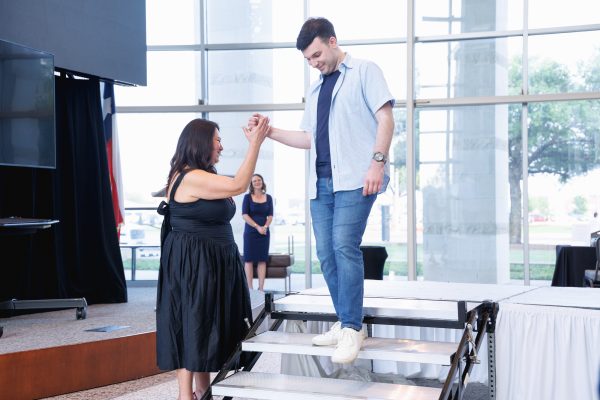
On April 25, the Sexual Assault Resource Center, or SARC, hosted its fourth annual “Beyond the Silence: Stories Worn Boldly” survivor fashion show, headlined by 17 models. Survivors, advocates and representatives alike walked down the makeshift runway, different attire for each model representing the common theme for the night: Sexual assault isn’t caused by what someone is wearing.
“To see people’s bravery, I mean, it brings me to tears every time,” SARC board member Tara Emerson said. “ … The thing I really love that it does is combat a lot of the stereotypes that what people were wearing or what they were doing or where they were impacted their assault in any way.”
From ballgowns and tuxedos to pajamas and everyday wear, every outfit was showcased by models. And if the attire didn’t have the audience emotional enough, the models walking to a personalized narration in their voice did.
“I was a child,” one model said as they walked the runway in a T-shirt and jeans.
“Sexual assault is never the victim’s fault,” another said whilst walking in a cropped shirt and leggings.
“I was a child, I was a college student, I never wanted this,” the model said as they walked in jeans and a button up.
“This event in particular is my favorite event that we do,” Emerson said. “It’s focused really on being able to tangibly support survivors. … They’ve experienced something this traumatic, and this is such an empowering way to show up. … One of the final phases that we sort of hope to see people get to is this incorporation and advocacy to be able to help other people that come behind them and also to claim their own voices again.”
To portray the last step of healing — a common theme of the night — one model walked to a recording in which they read “I walk for children harmed in the very places meant to protect them and for every child whose silence was never a choice.”
Amber Robertson, a four-year participant and founder of Brazos Valley Blessings — a nonprofit organization dedicated to ending the cycle of poverty in the Brazos Valley — said that she walks each year not only for women of color like herself, but so that the women and families she works with feel comfortable opening up to her, ensuring that the event’s message extends far beyond the runway.
“We just hope people, if you have a story to tell, even if you don’t feel comfortable saying it to those who love you … tell someone,” Robertson said. “Your voice is important. … Your voice and story matter.”
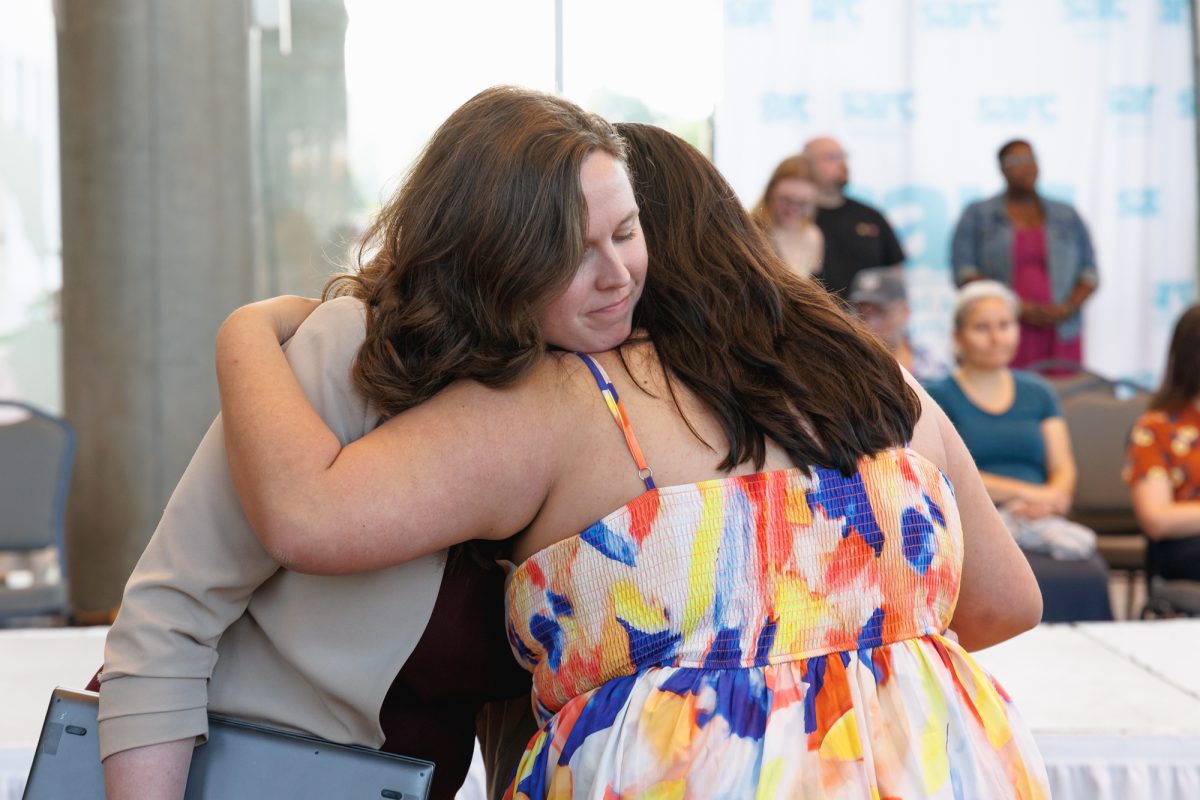
When the show concluded, the models had one task left to complete: They gave a rose to someone who believed them when they opened up about their assault. Each rose was given to someone who created a space of safety, compassion and solidarity.
As the models left the stage in search of the person they would pass their rose to, the audience broke up to take part in the stations set up across the room. Along the right side of the runway stood two tables: one dedicated for letters to the models and another for drawings of feelings that the show evoked.
As each letter and drawing was completed, SARC members taped them along the wall or pinned them along a string, showcasing the waterfall of emotion felt by audience members and models alike.
“It feels like family,” Robertson said. “Like, even if you’ve only met them for 30 minutes, by the end of the experience … they will hug you. Anybody will tell you, ‘I love you, and I’m here if you need me.’ So the family of this is amazing.”
Robertson expanded, noting that this feeling of solidarity is what helps others open up about their assault. But even for those who aren’t ready to speak up just yet, Emerson explained how “Beyond the Silence” can still bring comfort to those in attendance.
“I think that when people do experience something like this, it’s extremely isolating,” Emerson said. “It is really hard to speak up, and if that is someone’s choice to keep it to themselves, I think it’s important to honor that. But they can still work on their healing in their own ways and coming here to see that there are so many different people, different walks of life, different ethnicities, different ages, different identities that represent people who are survivors. And so I think that could be a really empowering thing to just come and be inspired.”
First-year participant Christopher Williams asserted that everyone’s story is one worth being told for those who are ready to speak up or find their voice through the event.
“Even if you’ve faced adversity, even if no one’s listening right now, you have value,” Williams said. “You matter, what happened to you still matters, and it always will.”