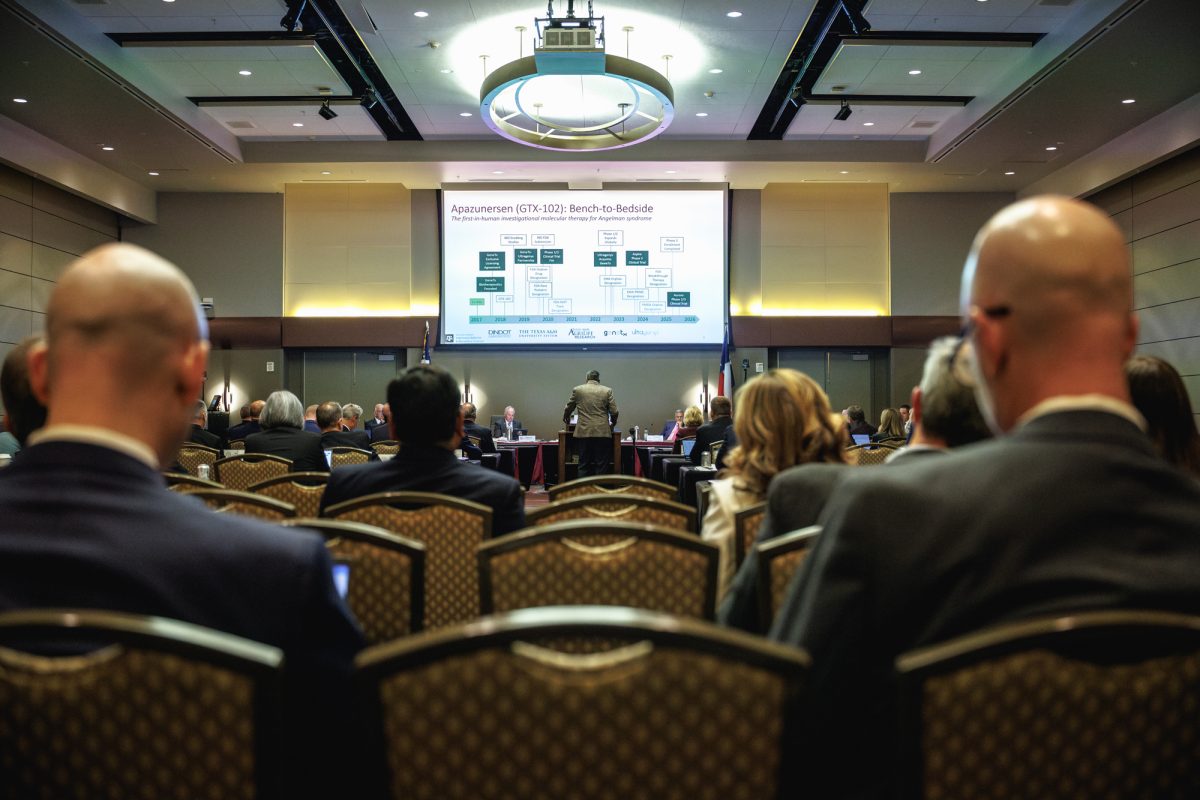


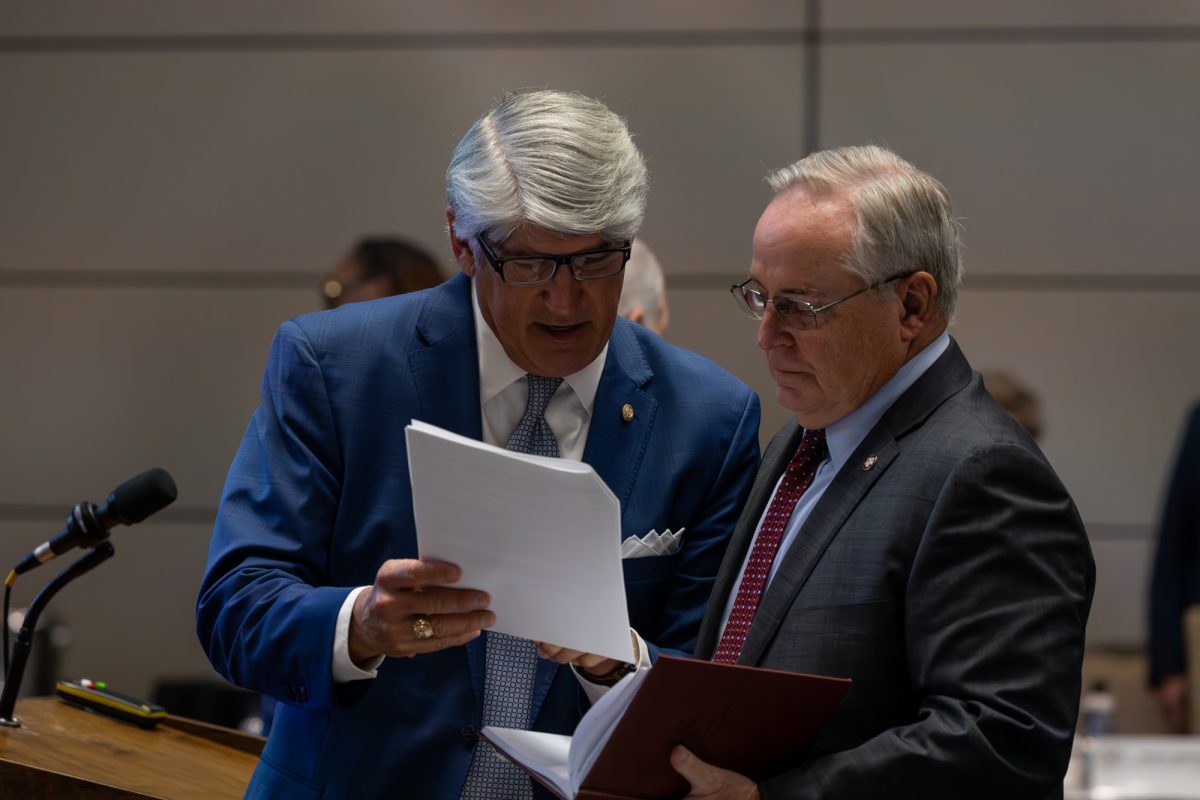
The Texas A&M University System Board of Regents approved $1.925 billion in proposed construction projects and renovations as part of the upcoming 2026-2030 Capital Plan on Aug. 28. The Capital Plan totals $6.6 billion and includes $4.6 billion for previously approved projects set to begin design or construction.
The budget allocates over $600 million for proposed projects for A&M’s College Station campus, with further funding divided among the University System’s satellite campuses. Following the Regents’ approval, blueprints for the flagship campus include the following:
- Dedicated Center for Learning Arts and Innovation – $235 million
- New Biology Teaching and Research Building – $220 million
- Additional parking garage on Discovery Drive – $103.86 million
- Restorations to the exterior of the Academic Building – $30 million
- Plumbing riser replacements to Fowler, Hughes and Schuhmacher Halls – $10.7 million
- Turf replacements at Penberthy Rec Sports Complex – $5.3 million
- Renovations to the first level of the Medical Sciences Library – $5.3 million
Administrators within the System met to discuss the programmatic budget reviews and Capital Plan at the Meeting of the Committees on Finance and Buildings and Physical Plants on July 28 and 29.
“In total, there are 830.6 million dollars of projects proposed to be initiated in the upcoming fiscal year,” Chief Investment Officer and Treasurer Maria Robinson said at the meeting. “Approval of the Capital Plan will permit the system members to proceed with pre-construction services for those projects… so they can work on things like architecture, engineering, site preparation and demolition if applicable.”
A&M President Mark A. Welsh III highlighted the costliest of the agenda items at the meetings: the biology department’s Biology Teaching and Research Building, and the College of Performance, Visualization and Fine Arts’ Center for Learning Arts and Innovation.
“The biology programs at A&M have been a tremendous success story for decades, but the biology facilities on campus have aged to the point now where they are simply inadequate for teaching…” Welsh said at the meeting. “This new state of the art facility will keep this great department on the leading edge of the field, which is exactly where they deserve to be.”
The project comes in response to complaints regarding the department’s facilities from both students and faculty. Many of the courses are currently held in Heldenfels Hall, which some members of the department argue is too old to support the utility and infrastructure needs of upper-level biology research and labs. The building is set to be four stories and sit across from the Corps of Cadets quad arches.
Across campus, the Center for Learning, Arts and Innovation has been in the works since the College of Performance, Visualization and Fine Arts’ launched in September 2022. Located on the current site of Lot 74, the building will give the college 187,000 square feet and five stories of dedicated learning space.
“Consolidating VPFA in this building will open up space in at least six different buildings on campus where their faculty, staff and classrooms are currently located,” Welsh said. “It allows for the consolidation of people and activities from several other colleges that are also space limited.”
Welsh also commented on the Discovery Drive Parking Garage during the meeting, where an additional 1,800 to 1,900 parking spaces will be added to facilitate the transportation needs of the student population. The garage is part of the University’s larger initiative to expand the infrastructure of West Campus, where the recently unveiled 211,000 square-foot Aplin Center will be built.
Additional items on the Capital Plan include $588 million in future proposed projects, with start dates as early as 2027. Some of these projects include renovations to the Heep Laboratory Building, construction of a West Campus Learning Commons and another dedicated building for Mays Business School.
“Continuing the focus on creating a robust West Campus infrastructure, this project gives us critically needed classroom and study space,” Welsh said. “ … It will also help us minimize student travel between West Campus and Main Campus, which is an important safety issue for our campuses these days.”
Administrators hope that the construction of the new facilities will combat the effects of A&M’s increasing student population alongside current growth enrollment caps. Regent Bob Albritton questioned Welsh on the necessity of the project, as numerous measures are already underway to combat College Station’s overcrowding.
“We say we have to have this, for this, this and this, yet we’ve frozen enrollment,” Albritton said. “How are we educating these kids now? How are they getting through without this $1.9 billion of improvements?”
“Many of them are in many more 400 person classrooms than you’d like them to be in, in core courses,” Welsh replied. “Many of them are living downtown as freshmen because we can’t put them on campus; we don’t have enough dorm space. Many of them are going off-campus to eat meals because we don’t have enough dining space for them, or enough dining facility hours… We did not build the infrastructure to support all that, we just didn’t.”
Proposed projects at other system universities include additional funding for dock infrastructure at A&M Galveston, a new innovation lab at Tarleton State University and general infrastructure improvements to the RELLIS campus. The Capital Plan will take effect next year, with projects being approved as they enter the construction phase.
“This plan gets us to the five-year point, we believe, with the ability to then say, ‘Okay, how big does Texas A&M need to be for the state of Texas?’, that’s the goal,” Welsh said. “If all of this happens, it goes a long way to solving the problems.”