

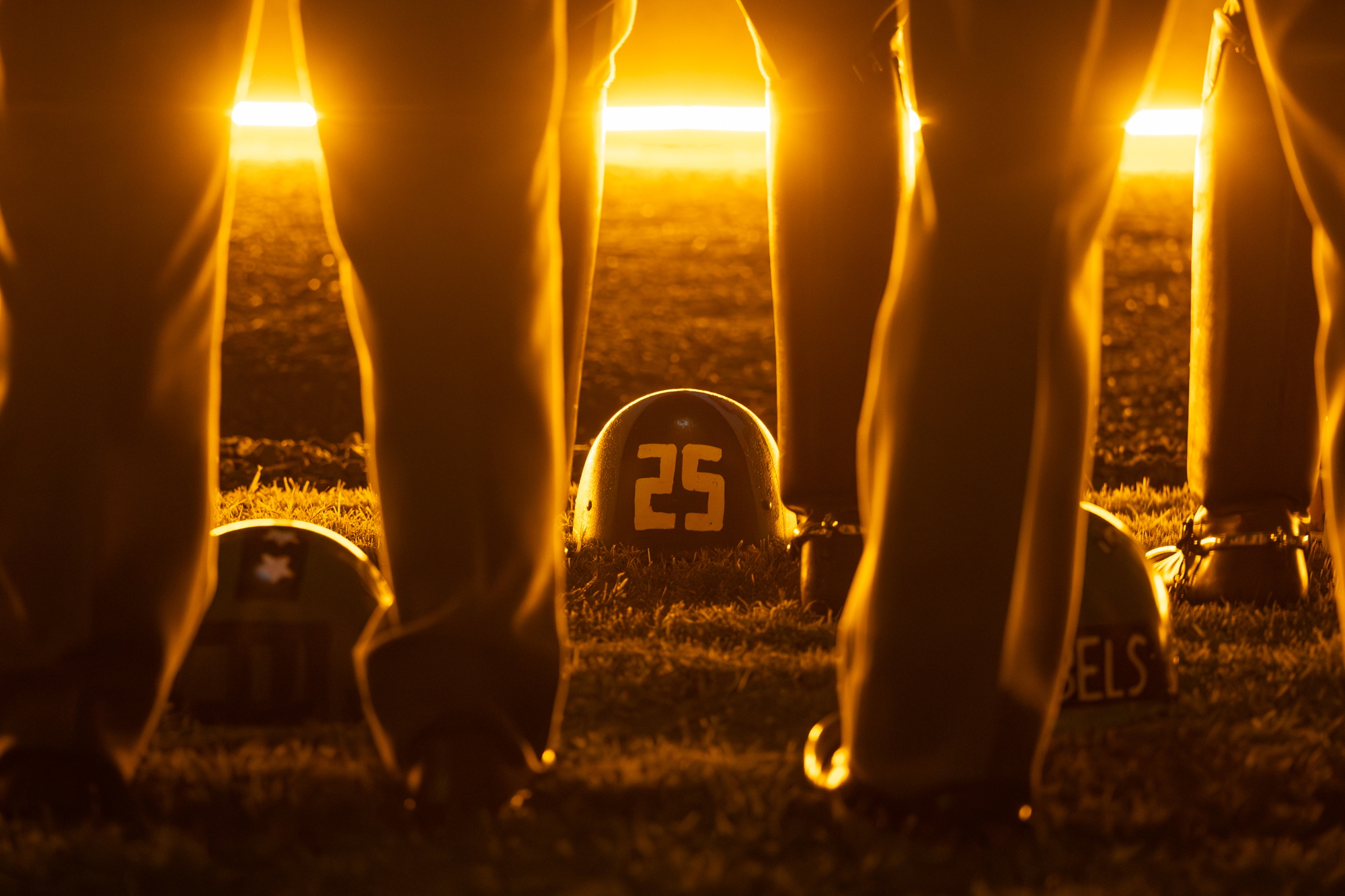
Grab, pack and go. That’s what filled the minds of the Aggies as they traveled three-and-a-half hours deep into the heart of Central Texas.
The hum of slowing engines filled the air as trucks piled with Student Bonfire members came to a stop. Supplies and a willingness to help is all they needed as they stared at the destruction ahead of them.
A sea of fallen trees, debris and utility flags marked their home for the next week. Without a second thought, the members stepped out of the car.
Twelve: A number sacred to Texas A&M — and even more sacred to the men and women of Bonfire. That’s how many dropped everything to aid in the midst of chaos.
No personal items packed. No clothes, water, food or thoughts for themselves. Only the want to help just as many others did on Nov. 18, 1999, when the Bonfire Stack collapsed.
On July 4, the world turned upside down for Texans residing in the Hill Country. Four months’ worth of rain came crashing down, breaking record-high levels for the Guadalupe River — quickly becoming its highest flood on record. Four days later, the death toll was recorded at 104, with numbers still climbing as rescue efforts continued.
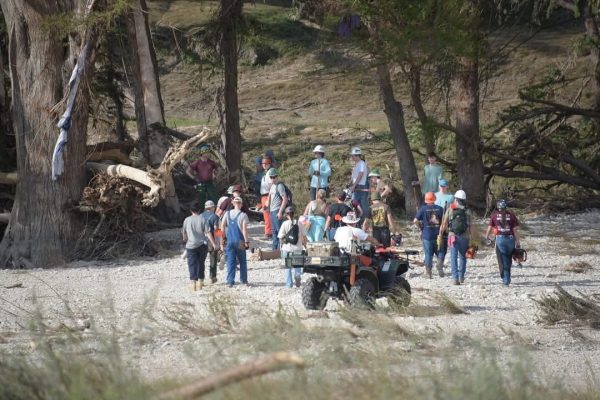
As first responders began their search, help from Aggieland arrived. The 12 members entered Kerrville on Sunday, July 6, to a scene filled with mass chaos. First responders scattered, searching for any sign of life among the destruction.
With no resources packed for an overnight stay, the 12 prepared for a week-long journey.
‘It’s the Aggie way’
“On Saturday, six [members] tried to go down and volunteer but were turned away due to the fact that [Kerr County] wasn’t organized yet,” Junior Redpot Ethan Schreff said. “They couldn’t take them or tell them what to do because they had no idea. So Sunday, we were called back out … and they were like, ‘Hey, if you’re willing to volunteer, we have a spot that y’all can come and work.’ And it was instantaneous.”
Immediately, 12 members packed their vehicles and headed to Kerrville. Schreff described the number as small, but two A&M former students had other thoughts.
A member of the Knights of Columbus in Boerne, Mark Crews ‘79 was inspired by Bonfire after reading a press release written by a member of the Board of Directors for Bonfire, Dion McInnis ‘03. In his release, McInnis explained Bonfire’s role in Kerr County and Bonfire’s dedication to the cause.
Crews was moved by Bonfire’s efforts and immediately reached out to an old friend, Dennis Mudd ‘83.
“Dennis asked me a question when I’d sent him that first article,” Crews said. “He said, ‘Man, what are you thinking?’… I said, ‘Dennis, what I’m thinking is that … the same values that you and I learned and left A&M with are still being passed along. … Here we are 50 years later, and these kids are stepping up, stepping out and doing the right thing.’ It just, it speaks to the university. It speaks to what being an Aggie means.”
Throughout this process, Crews described social media as an amazing way to share information and the story of Aggie Bonfire — and share is exactly what he did. Crews didn’t solely reach out to Mudd, but instead to many friends, old and new, including former Kendall County Aggie Mom’s club president, Patsy Schwab, who helped raise over $12,000 to fund Bonfire’s efforts.
Additionally, Crews shared McInnis’ press release to his own social media as well as those in his community, frequently reposting updates on Bonfire’s condition.
Crews’ passion to share Bonfire’s story drew in the attention of many people, Ags and non-Ags alike, who shouted the praises of the Aggie crew.
“I mean, it’s the Aggie way,” Scherff said. “You’re called, and we were already planning on going out, but they called and we were like, ‘How fast can we get there?’”
‘We’re already here’
Despite being turned away at first, the Aggies were called back when first responders couldn’t effectively process community support and realized that their manpower alone wasn’t enough. In order for recovery to get underway, miles of debris and brush needed to be cleared for responders to begin their search.
That Sunday, McInnis received a call.
A Kerr County representative painted a picture of destruction and chaos, with nobody to clear a path for responders to get through. They needed a group with an established chain of command and experience in inhospitable environments; a group familiar with clearing timber, brush and debris.
But there was something McInnis didn’t know.
He told the representative that Bonfire members were in the midst of preparations and that, while he would reach out, he couldn’t make the decision for them — it had to be their call. However, when he contacted one of the Redpots to ask if they had the time and resources, their only response was “We’re already here.”
“It gives me goosebumps every time,” McInnis said. “They didn’t ask, they didn’t wait to be asked, they just went.”
They went but arrived slightly underprepared. With few tools packed, the Aggies were forced to improvise, but this didn’t deter them.
“It would have been reasonable for them to say, ‘Perfect, we’ll see you tomorrow,’” McInnis said. “Instead, they immediately came back to Aggieland, loaded up on their equipment, set an advanced scout team … where they got the lay of the land … came up with their mission for the next day … and they were deployed at that point as a tactical mobile debris removal team.”
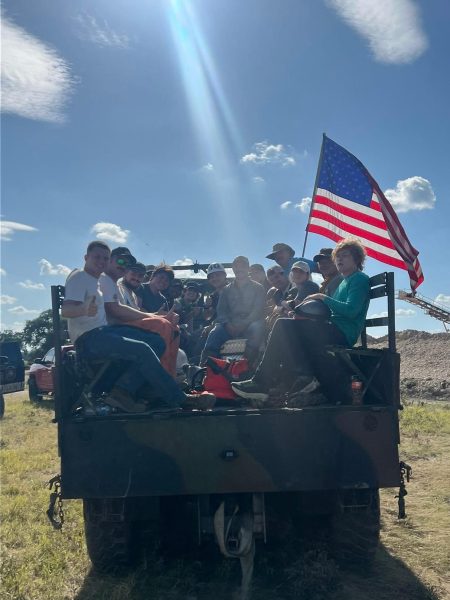
As the Aggies cleared paths for search-and-rescue teams, the members and representatives of Kerrville quickly realized that they were dealing with a unique group.
“It was really, really tough out there,” McInnis said. “I had a radio on me, and I would hear talking about, ‘This group wants to come in. Can we take a break? When are we planning on stopping for today?’ and the only radio chatter around Bonfire would be at the end of the day when the command center would come in and say, ‘Hey, we’re ready to go, can you guys come back?’ They just have no quit in them.”
But as the week went on, Bonfire assumed more responsibility as new tasks were added and more members arrived.
By the end of the week, 62 members of Bonfire were in Kerr County, helping not only in clearing debris but also in assisting search and rescue.
“We would go through these different brush piles, and I mean you would see 60, 70-foot trees just swept over and piled on stuff,” Scherff said. “Of course, being thorough, we would hit a pile at least three times, because you don’t want to miss anything. But we were talking with [McInnis’] brother, who was part of search and rescue. [McInnis] called to explain what we were doing, and he’s like, ‘You know you’re doing search and rescue, which isn’t an easy mindset to get into nor an easy task.’”
The students, who initially came to help clear brush, tackled every task at hand without question, even ones that were difficult — not just physically, but emotionally — to work through.
“It was tough,” McInnis said. “I mean, I still have a baby’s onesie that I found because I can’t let it go. And, you know, there were other things that you saw and experienced, and I mean, I’ve seen some things in my life. I’ve had a little bit more time to accumulate stuff, and if I’m still affected the way I’m affected, I have to think, ‘Well, what about them? If this is still with me, what about them?’”
Sadly, finding a baby’s onesie wasn’t the only solemn thing that occurred that week. After Bonfire members were trained on search and rescue, their task became no easy feat.
The members were asked to search through the piles of debris, identifying uncovered bodies by the smell.
Members would use their tools to plush out any smells for signs of cadavers. Scherff explained that their system was simple. Hit the piles a minimum of three times, mark the area for responders and move on to the next.
Bonfire members repeated this task for 20 miles on each side of the river, never once stopping. Scherff explained that their internal established chain-of-command is what helped them complete tasks quickly and efficiently.
However, these Aggies weren’t just there to help bring peace to those who’ve passed. Along their trek, members would stop to ask local community members if there was anything they could do to help them, always keeping Selfless Service at the forefront of their minds.
This experience wasn’t just another job for Aggie Bonfire: It was about serving a community and helping those in need.
“They did so much,” McInnis said. “They put so much of themselves out there. … When I was talking with my brother, he said, ‘Make sure that anybody that goes out there understands that they are going to see something that’s going to change their life. They can’t go in not knowing that.’ They were told that, they communicated that to each other. They accepted that likelihood, and then they did the job. I am progressively and more intensely impressed with them.”
‘We’ve come full circle’
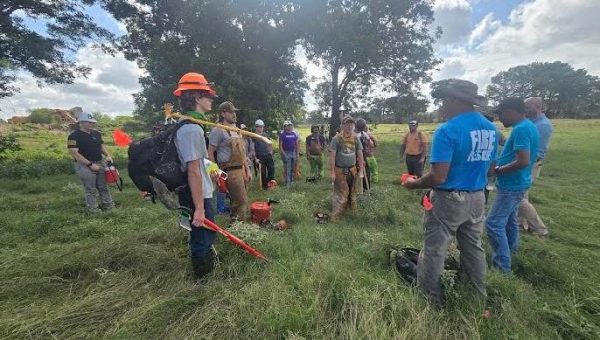
Now, Bonfire is home in Aggieland. They are back to the grind, preparing for this year’s Burn, getting ready for class and returning to normal. However, this experience is one that they will never forget.
“I am amazed at how many people were willing and how many helped, even if they couldn’t show up,” Scherff said. “It was just so the Aggie way. They care. … To see all the people that I’ve watched grow into great leaders, it was amazing to see that.”
But leaving to help in Kerr County didn’t just mean leaving home — it meant leaving right in the middle of Bonfire prep.
During the summer, many members stay behind in College Station to help in fundraising and preparation for Bonfire, making sure that the cut site for wood is secured, cleaned and ready to go for the fall and that all vehicles are maintenance ready for transport.
Scherff explained that they experienced quite a setback when they left for the Hill Country, mostly in fundraising.
To help raise money to pay for Bonfire necessities, members can have anywhere from four to eight jobs a day helping locals in Bryan-College Station move furniture back and forth between homes.
These jobs — which are volunteer based and paid by the customers discretion — bring in an average revenue of $8,000 per week, meaning the time spent in Kerr County set them back by thousands to meet their yearly quota of at least $90,000 to keep Bonfire running.
Scherff explained that the lack of preparation for departure set them back more than they had anticipated. Instead of missing one week of prep work, it essentially set them back by two, while being forced to reach out to customers and postpone until an unknown date.
“It has been rough and it has set us back, but we’ll figure it out,” Scherff said. “We did the right thing. … We’d do it again, even if it was now, no matter how far it puts us behind. That’s what we’re about. Being out there and getting to assist was kind of a blessing to all of us to actually see what we do translate into the real world and actually be helpful.”
Despite the setback, Bonfire members didn’t view the week as a loss but instead as a fulfilled calling.
“When you build Bonfire, one of the things that you learn … is that when you have an ability, you have a responsibility,” McInnis said. “If you can do something that needs to be done, then that’s not leverage for you. That’s not an opportunity for you. That’s a responsibility for you.”
Not only does the impact of this experience run strong in their hearts, but the lessons they brought back and the implementation of their values are what truly set this work apart from others.
“Putting all of our values, building these community-based, selfless-service leaders and wanting to help people, all of these million things that you can describe an Aggie for, they embodied that in the best way possible,” Scherff said.
This legacy that A&M has built of Aggies being there for Aggies was heavily showcased during this experience, catching the attention of many current and former students alike, 26 years after Texas came together to support the community after the Bonfire Collapse.
“We’ve come full circle,” Crews said. “When the football team came out and carried logs off the kids, and now the kids are paying back to the community.”
Just as the community came to support and still honor the 12 fallen students of the Bonfire of ‘99, 12 current students, just like the ones lost so long ago, came together, dove in head-first despite the risks and helped a community in need.
“It is just A&M to its core,” Crews said. “This is what it’s all about.”









!["2026 [Hillje, Tilly]/The Battalion. All rights reserved.”](https://thebatt.com/wp-content/uploads/2026/04/IMG_5581-1-1200x800.jpg)
Rich DeLaney • Aug 28, 2025 at 10:15 pm
I’d urge caution anytime money is raised and Mark John Crews, convicted felon is involved.
Sincerely,
Richard DeLaney
Mark John Crews • Aug 27, 2025 at 12:39 pm
Amazing story of rescue teams, A&M bonfire students, Aggie Moms, and an ol’Ag coming together to selflessly serve the flood relief in Comfort Texas!
“Better Together”
Gary Henley • Aug 24, 2025 at 9:59 am
God bless them for what they’ve done and for the life values they hold dear as they reflect those values in deeds of selfless service to others in need.