

For a few short weeks, history isn’t just visualized in textbooks. In Aggieland, students have the opportunity to take an up-close look at historical milestones.
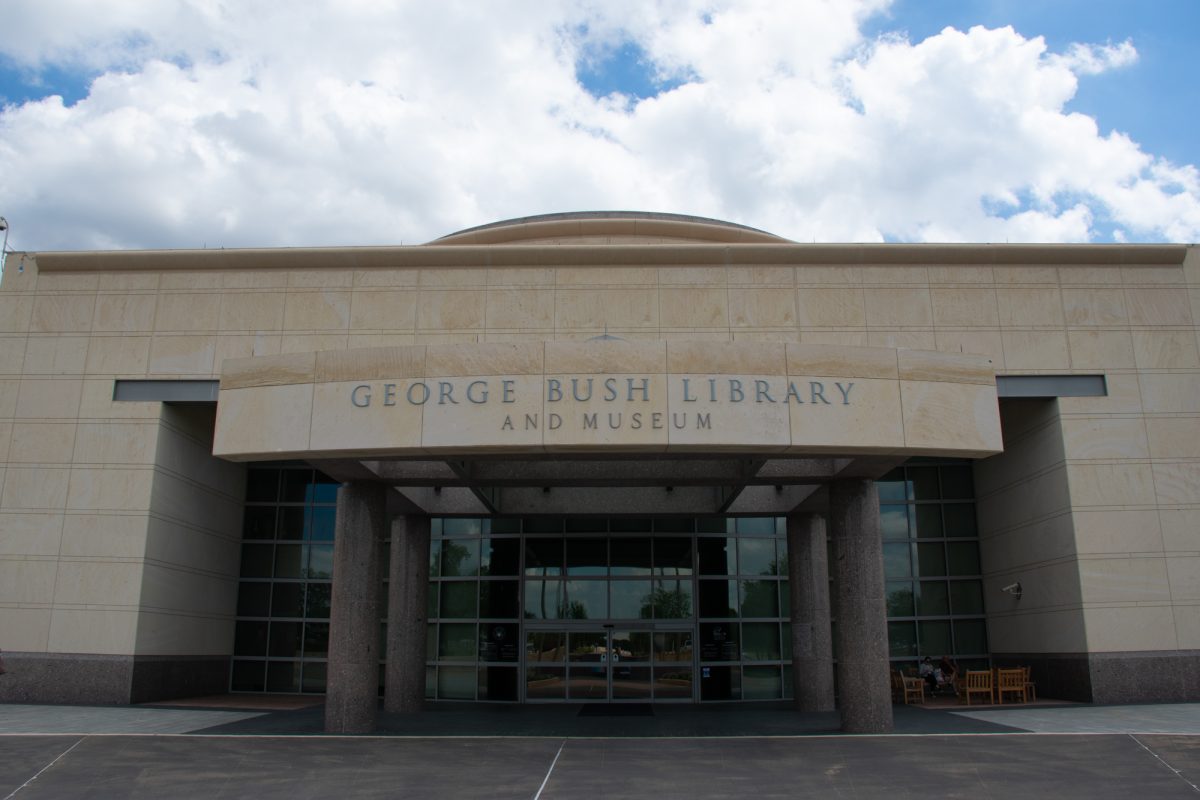
The cost-free “Opening the Vault” exhibit at Texas A&M’s George H.W. Bush Presidential Library and Museum showcases 17 original landmark documents from the National Archives representing American history. These documents, which are typically housed within National Archives facilities in Washington D.C., are on display for a limited time through April 12 for public viewing.
According to Bush Library Marketing and Communications Director Amy Raines, the exhibit is a once-in-a-lifetime opportunity that stands out for the extent of history that it brings to A&M students. The display features documents spanning centuries of political, cultural and social change.
“We’ve got the Treaty of Guadalupe Hidalgo,” Raines said. “We have Elvis Presley’s induction paperwork to go into the Army. And then we have the Pacific Railway Act, which has an original Abraham Lincoln signature on it.”
For Raines, the admission-free gallery extends beyond displaying history in glass cases; it is also about making it accessible to the local community.

“[This exhibit serves] To give people in this area an opportunity to see these documents and learn about their significance,” Raines said. “ … You know, to see who is involved in their history and how they affect things today.”
Marketing graduate student Allie Petrusik has worked closely with these records through the exhibit’s design and promotion and shared that these interactions changed how she viewed historical figures.
“It kind of shifts your perspective,” Petrusik said. “Like, ‘Oh wait, these people are real, and they touched this; they did this.’”
In addition to the tangible value, Petrusik shared that some documents include visual details that are easily missed when learning in the classroom or looking at digital representations.
“The Statue of Liberty deed,” Petrusik said. “That one was really pretty because who would have thought it was illustrated, too?”
On a broader scale, the gallery reflects the Bush Library and the National Archives’ mission to preserve and impart knowledge of the nation’s history with the community. Director of the Bush Library Dawn Hammatt, highlighted the responsibility that comes with preserving the documents.
“We are the stewards of documents for the American people,” Hammatt said. “So we’re very conscientious about how we treat these documents, how much light they get, how we display them. Our decisions are about perpetuity.”
According to Hammatt, these archives rarely travel outside of Washington D.C., which made securing the documents a lengthy process.
“Getting all the paperwork in line and all the insurance in line and all of the logistics in line took about two years to get it done,” Hammatt said. “And so this looks like a rather simple exhibit because you’re just really faced with the documents, but this was very work-intensive to get it all finalized.”
However, the exhibit is part of a moving collection, so its stay at the Bush Library is limited.
“It’s going to close here on Sunday, April 12th, and we’ll pack it all up, and it’ll go up to the other Bush library up in at SMU,” Raines said. “So yeah, not a lot of opportunities to see something of this magnitude.”
Whether through preservation, design or communication, Raines, Petrusik and Hammatt agree that the exhibit centers on the chance to see original documents in person and understand the stories behind them.
“These are documents that tell the story of our shared history,” Hammatt said. “It’s really a great opportunity to understand the National Archives and what we do and why we keep these documents about our story.”
For students considering whether to visit, Raines emphasized the rarity of seeing some of the documents on display.
“You know how many people have ever seen an original Abraham Lincoln signature?” Raines said. “Not many.”


!["2026 [Hillje, Tilly]/The Battalion. All rights reserved.”](https://thebatt.com/wp-content/uploads/2026/04/IMG_5581-1-1200x800.jpg)