

The best era of college football is behind us. Players now are money hungry and have absolutely zero loyalty to their universities, and from spectators rocking obnoxiously large hats to those sporting full-body paint, fanbases have struggled to adapt to the ever-shifting NIL and transfer portal landscape. Is college football so far gone that our amateur, collegiate league now must require a commissioner, similar to how Roger Goodell oversees the NFL?
Before we dive in, we must ask: What is a commissioner?
A commissioner works as the “chief executive” in a league, responsible for overseeing operations, enforcing rules and, of course, maximizing revenue. They are the figureheads of strategy, logistics, contracts, media and officiating that goes into their respective sport. Ultimately, the commissioner is widely considered to be the public face of the league.
Growing up watching pro sports exclusively, it always interested me when I’d hear people say they thought college football was better than the NFL. As I started tuning in to college football, I finally began to understand what the appeal was: school spirit, big, exciting crowds and hungry players.
I could see how driven the players were, putting their bodies on the line to fight for their alma mater and prove they were NFL-worthy. The atmosphere was loud, the fans were proud, and the sport was exhilarating to watch.
Sadly, however, this college football environment doesn’t exist anymore, having been on a smooth descent ever since the transfer portal and NIL were introduced.
In 2018, the NCAA announced their implementation of the transfer portal, allowing student-athletes to transfer schools more easily but requiring them to sit out a full year before they could play for their new school. This concept seemed fair enough, opening doors for students to seek new opportunities while making sure they were with a coaching staff they believed in. However, skeptics of this new system pointed out this process could only change the college football scene for the worse, especially if they introduced an outlet for players to be paid.
One year later, California passed an NIL state legislation allowing collegiate athletes to receive compensation for brand deals and anything involving their name, image or likeness. This legislation set the tone for other states to follow suit and pass legislation of their own.
In 2021, the United States Supreme Court ruled unanimously to force the NCAA to take action against their own NIL procedures. This decision became effective on July 1 of the same year, as did a new transfer portal rule allowing players to transfer one time without a sit-out consequence. Then, in 2024, the NCAA dropped a nuke, allowing players unlimited transfers. This was the beginning of the end for college football.
So, why do we need a commissioner? Because, college football has effectively become a pro sport.
Players have no incentive for loyalty beyond money, as some are being paid millions to play football at the collegiate level. Every year, when the transfer portal opens, players are thrown more cash than they’ve ever seen in their lives from these programs, which has nearly eliminated the possibility of non-Power-Four schools even remotely competing for a national title, with a few exceptions. It has also put a damper on fandom, as schools can essentially have a brand new roster every year, leaving loyalty to rest solely within the fans.
If student-athletes are being paid like professional athletes, they should be treated as such. What a commissioner could do for college football is simple: bring order to the chaos by introducing contracts, limiting transfers, setting budgets and reshaping college football for the players, staff, investors and the fans.
Introducing contracts and setting NIL budgets would incentivise school loyalty and limit the amount every school would have to spend on players, in hopes that all teams may have a more or less equal opportunity to grab the best guy on the board. Contracts would help eliminate the problem of players transferring every year and would give players a taste of what the NFL is like.
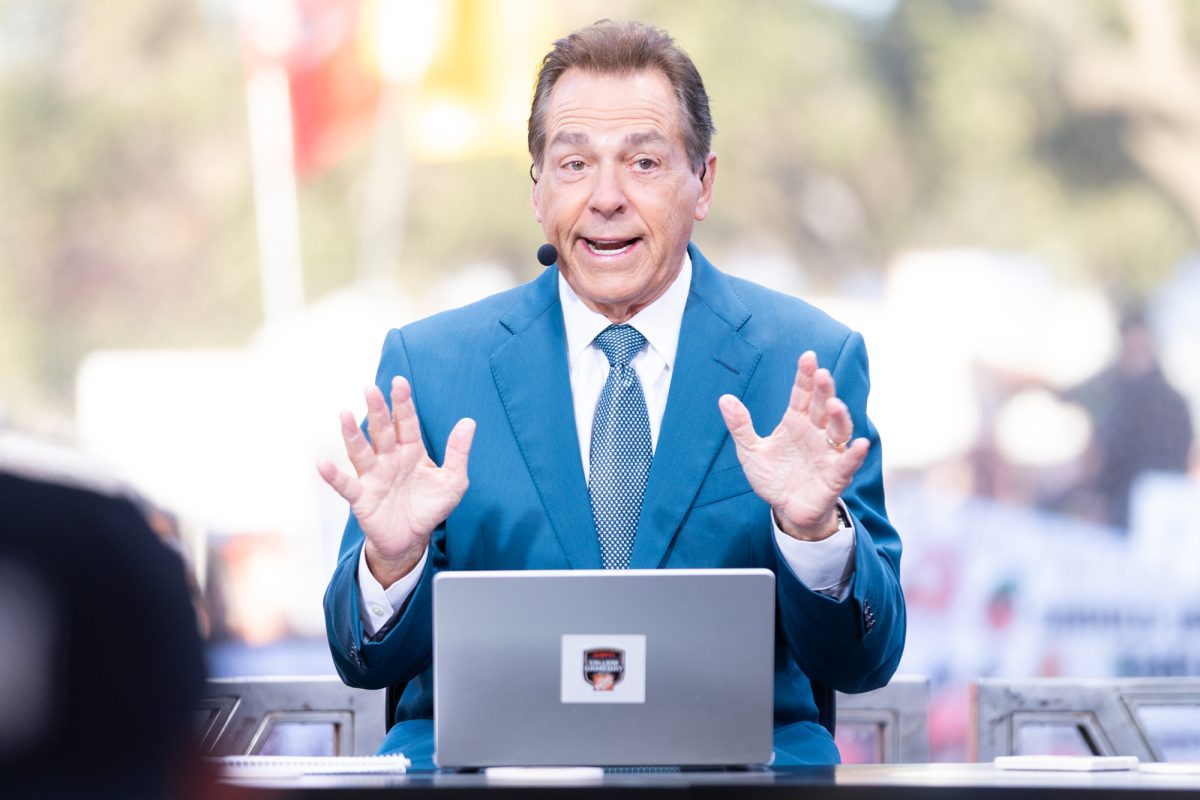
Former Alabama head coach Nick Saban has been eyed by many coaches, players and fans alike as the favorite for the NCAA commissioner job. However, although he is a vocal advocate of the need for a commissioner, he claims he doesn’t want to do it himself. My vote for commissioner was punched a decade ago, but it seems even he isn’t ready for the job.
LSU head coach Lane Kiffin, however, believes Saban is college football’s best contender for the position.
“I can’t imagine there being a better person that genuinely has the best interest for the game and the kids,” Kiffin said. “He [Saban] always has. He’s always been old school that way. So, there couldn’t be a better person than him to do it.”
Saban responded, claiming he loves where he’s at but still sees a need for an NCAA commissioner.
“I don’t want to be in that briar patch of being a commissioner,” Saban said. “But I do want to do everything I can to make it right.”
Safe to say, there’s growing support for the cause, and, if nothing else, the NCAA should review what fans of the sport have to say and seriously take into consideration the introduction of a college football commissioner.
Dylan Fonville is a sophomore journalism major and sports writer for The Battalion.