

The pictures that have bubbled up on my Pinterest feed include a girl holding a Mai Tai on the beach, wearing platform flip flops, framed through beaded seashell curtains fit with a matching ocean view. Maybe this goes to show I gravitate toward a carefree life concerned more with young travel experiences than first jobs.
Put that against my friends’ boards, and there’s an array of various dream lives, including pictures of coffee in New York City and a quiet, rustic farmhouse. One chases the corporate ladder as a domineering young woman, while the other is sweet and modest focused on family. Each of us has a niche set of words smashed together to make us seem cool in a stand-out way — a part of the crowd, but only as a trailblazer who did it first.
Free of the pressures to post yourself to keep up the facade of your life, Pinterest offers an escape through which we get to craft perfect worlds with strangers’ grandiose pictures.
Launched in 2008, Pinterest has stood the test of time; as it turns out, people never get tired of dream boards and pretty pictures. If we were sick of curating better fashion styles or interior designs, the app may have hit the hay, but still stands strong in 2026.
And like any other company that wants to stay relevant, Pinterest has turned to AI to increase user satisfaction. As a result, their app has been overtaken by more advertisements than ever before as brands have the opportunity to craft collages that are more personalized to users, causing the sheer number of promotions to rise. AI has seeped further into the marketing side of the app; even the classic pictures posted by people for inspiration are analyzed by Pinterest to create a list of similar items that are readily available for purchase by the user.
An app meant to help with inspiration, it is no longer there as a service for creative minds. Pinterest is now a battleground for hungry brands attempting to breed the consumeristic lifestyle Americans cannot seem to leave in the past.
I take this influx of inescapable advertisements and push for AI as an opportunity to denounce the absolute inability for us to ever use this app in a thoughtful manner, with the intention of viewing the images as building blocks to construct a better version of ourselves.
As if we don’t already hear enough about the internet’s facade, with photos posted from specific angles and filters applied to fabricate the “oh-so-perfect moment” captured by camera; now there’s a newly added pressure to achieve the aesthetic lifestyle of our choosing that’s so readily available at our fingertips through advertisements offering products to match our desired life and aesthetic.
We’re closer to fabricating caricature versions of ourselves through the distorted mirrors of reality as we focus on the big, overarching connections made between these brands and the lifestyles they sell us to the point of no return. Who would we be without brands telling us who we should be?
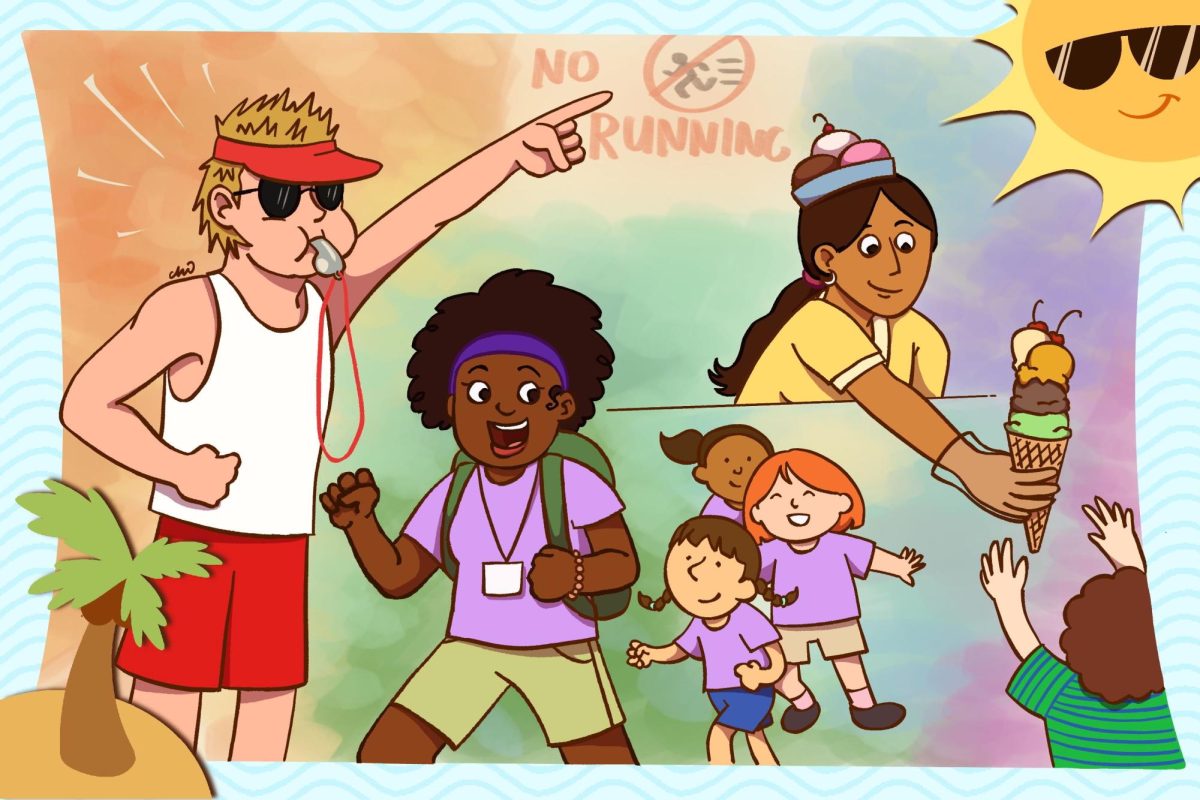
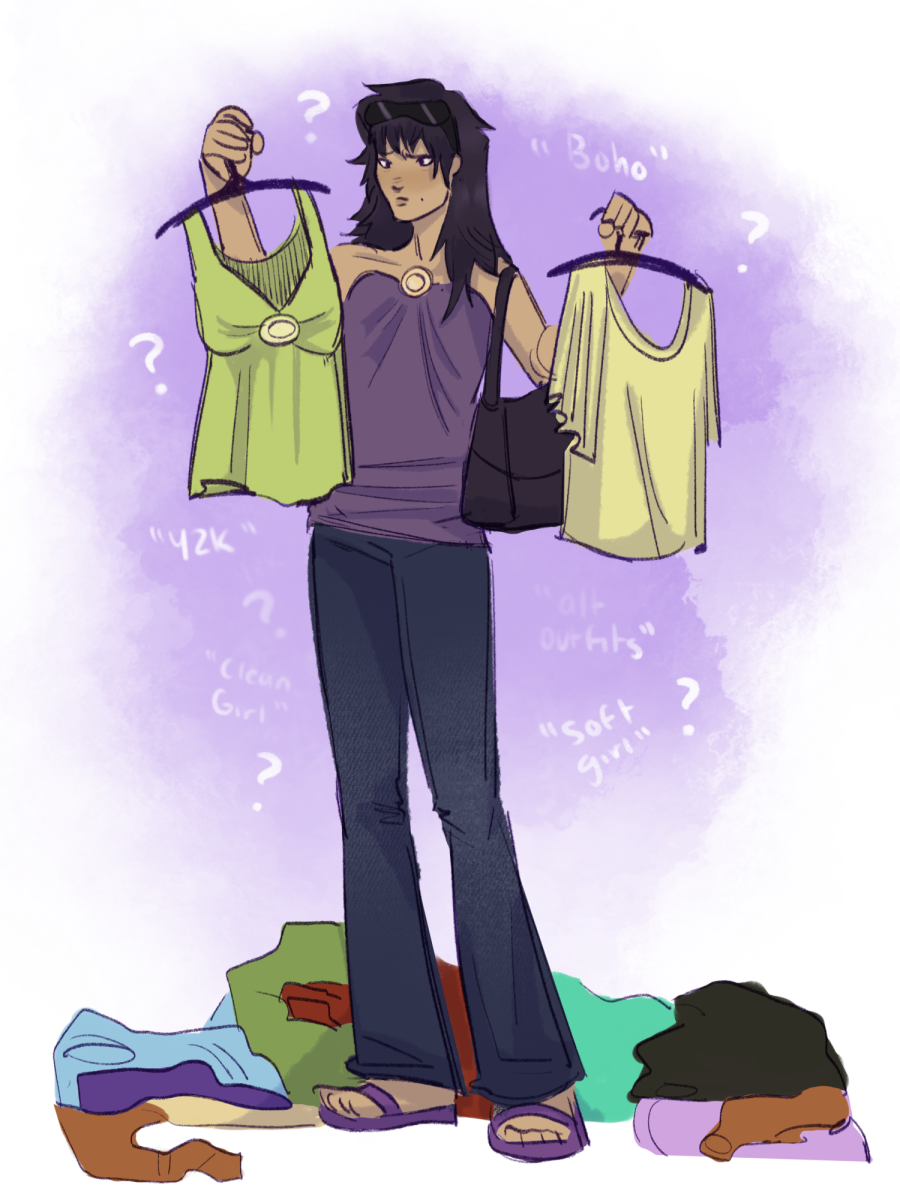
With the ease of sorting images on our Pinterest boards fueling our obsession with envisioning an absolute peak of existence, for ourselves, the need for everything to match and blend nicely together has ruined our ability to be human. Advertisements push the notion that only certain kinds of people who participate in select activities and have specific traits buy their products.
Individuality isn’t the goal. You don’t need to be the first person to dye their hair cherry cola or be a straight-A student who wants to buy a skateboard. Stereotypes have plagued humanity over and over again, and with the introduction of this lifestyle marketing, the boxed-in mentality of Gen-Z’s aesthetics doesn’t seem to be disappearing anytime soon — it is a painful reminder to stay in the line of societal expectations and keep spending money to better fit our images.
A love of aesthetics and cohesion is not a chance to bash a woman’s love of fashion, nor is it something to be written off for the psyche that feels at ease in its safe box. Instead, this is a very specific tactic of marketing that companies may use against us as we fall in line with consumerism that blurs the fine line separating products and personality.
Fashion, decorations and even where and how we choose to vacation might be candid reflections of the people we are, but the constant push that they should always be a reflection of our souls is a poor result of an endless exposure to shopping features and flawless photos.
Who you are does not come from Pinterest or any brand that sells you something. You are human, composite of a spectrum of emotions and interests that cannot be boxed in by the lifestyle marketers who take everyday items and transform them into words synonymous with personality for the purpose of money alone. An aesthetic can be so much more vast if you release yourself from the simplicity of AI driven marketing schemes.
Thea Findlay is a communication junior and opinion writer for The Battalion.