

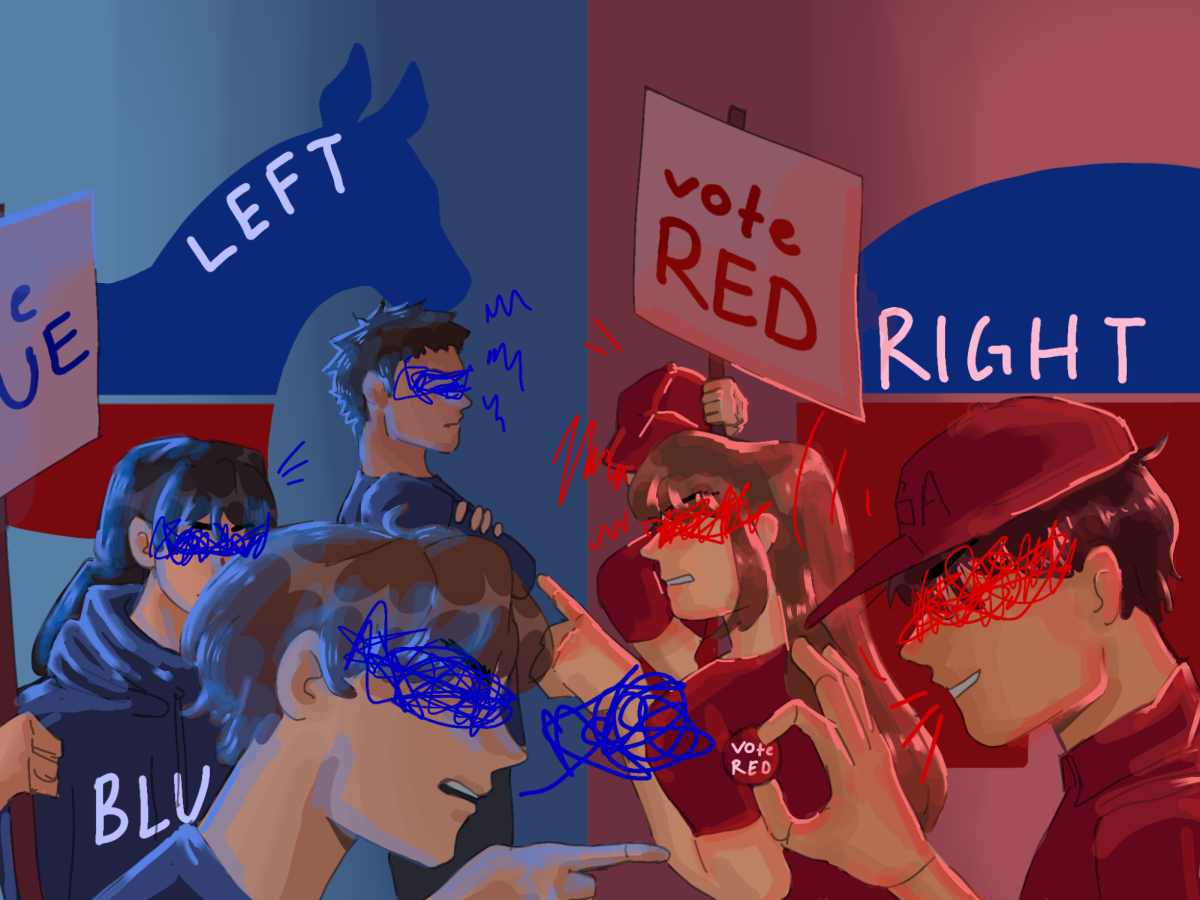
Civic commitments are now worn like personality traits, turning every issue into a test of loyalty rather than a subject of debate. Instead of asking what works, people ask what side they’re supposed to be on. When ideology replaces inquiry, citizens stop analyzing and start defending — and public life turns into a mirror instead of a tool.
Civic life used to be about solving shared problems; now it’s increasingly about signaling who you are and which team you play for.
Opinions are less often formed through reasoning as they are inherited from group membership. To take a position is no longer to make an argument — it’s to declare a self-image. Beliefs function like team jerseys, and public debate starts to resemble rivalry more than deliberation.
This shift feels natural because group affiliation is emotionally efficient and intellectually easy, offering certainty and belonging in a complicated and fragmented world.
Aligning with a political camp provides a ready-made set of answers, sparing individuals the discomfort of wrestling with evidence or uncertainty. Questioning one’s own side becomes risky, not because the argument is wrong, but because disloyalty is punished more harshly than ignorance. In this environment, thinking is treated as hesitation and doubt is mistaken for weakness.
As a result, political discussions become symbolic rather than practical. Policies are judged less by their effects than by what they represent, while proposals are good if they affirm the tribe and bad if they threaten it, regardless of the outcomes.
Compromise becomes moral failure, and evidence becomes optional if it contradicts the narrative. Leaders are rewarded not for producing results, but for demonstrating purity. Governance turns into theater as performance displaces problem-solving altogether.
Social media has intensified this transformation: Platforms elevate content that provoke emotional reactions, and nothing provokes faster than partisan loyalty conflict.
Opinions become slogans, nuance becomes suspicious and disagreement becomes personal. In this ecosystem, people are trained to react instead of reflect, and a position is no longer something to be examined but something to be defended.
Politics is reduced to a stage for self-expression rather than advanced as a process of collective decision-making.
Some argue that this fusion of self-image and allegiance is inevitable because civic life is inherently personal. While it’s true that public policy shapes real lives, values and futures, caring deeply about an issue doesn’t require abandoning thought for allegiance. Values are not undermined by reasoning — they are strengthened by it. Reducing politics to self-identity may feel empowering but ultimately weakens the causes it claims to protect by shielding them from scrutiny and improvement.
When ideology replaces inquiry, mistakes become uncorrectable. If views are tied to selfhood, changing one’s mind feels like self-betrayal rather than growth.
However, democracy depends on revision. It requires that citizens are willing to weigh trade-offs, confront failure and adjust course. A political culture that treats beliefs as sacred symbols instead of working hypotheses cannot learn from experience.
It can only repeat itself louder.
Politics is not meant to be a mirror that reflects who we think we are, but rather a tool for shaping what we live with. The relevant questions are not “What does my side believe?” but “Does this work?” “Who does it help?” and “What does it cost?” Reasoning politically means being open to answers that complicate loyalty and disturb our comfort; it means choosing judgment over reflex and curiosity over certainty.
A democracy doesn’t require uniformity, but rather requires reasoning. Disagreement is healthy when it’s about solutions, not identities.
Citizenship is not fandom; it is participation in a shared project whose success depends on the ability to argue without dehumanizing and to revise without shame.
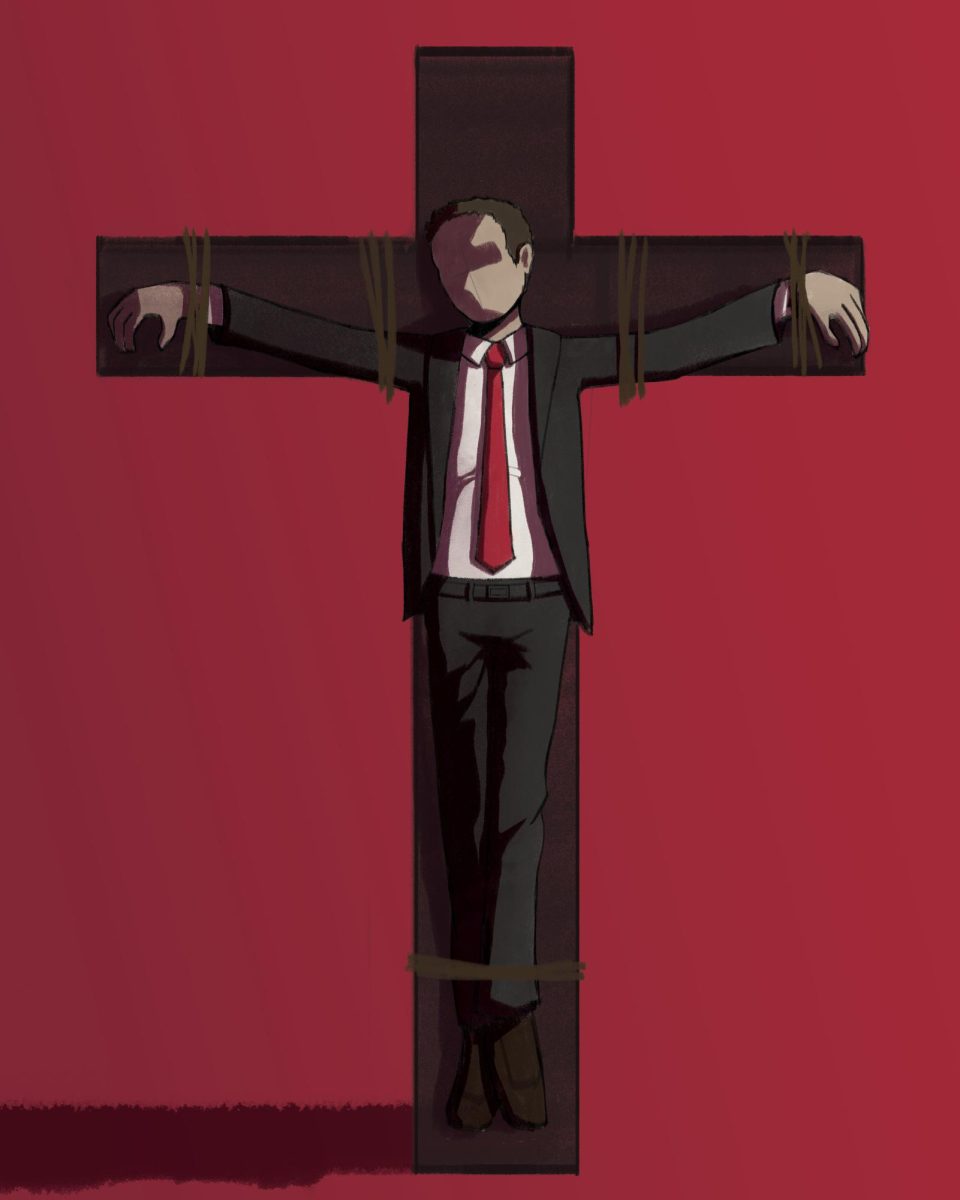
When public life shifts into an extension of personality, it stops being a method of governance. Citizens morph into defenders instead of thinkers, as leaders become symbols instead of servants. In such a system, debate hardens into ritual and progress stalls behind pride.
If we want a political culture capable of solving problems rather than initiating conflicts, we must separate who we are from what we believe. Loyalty shouldn’t substitute judgment, and alignment must not excuse indifference to evidence.
A belief worth holding is one that can survive examination.
Politics should be something we do, not something we are. When ideology becomes identity, democracy loses its ability to deliberate, and a democracy that cannot think cannot govern.
Prachi Arora is a political science freshman and opinion writer for The Battalion.