

World War II saw events like the Holocaust and the bombings in Japan that are today found in countless history textbooks and public memory. However, several lesser-known aspects of the war remain buried, both figuratively and literally — and they’re more local than one might realize. One Aggie professor has worked to unearth these secrets and forgotten fragments of history through his archeological research.
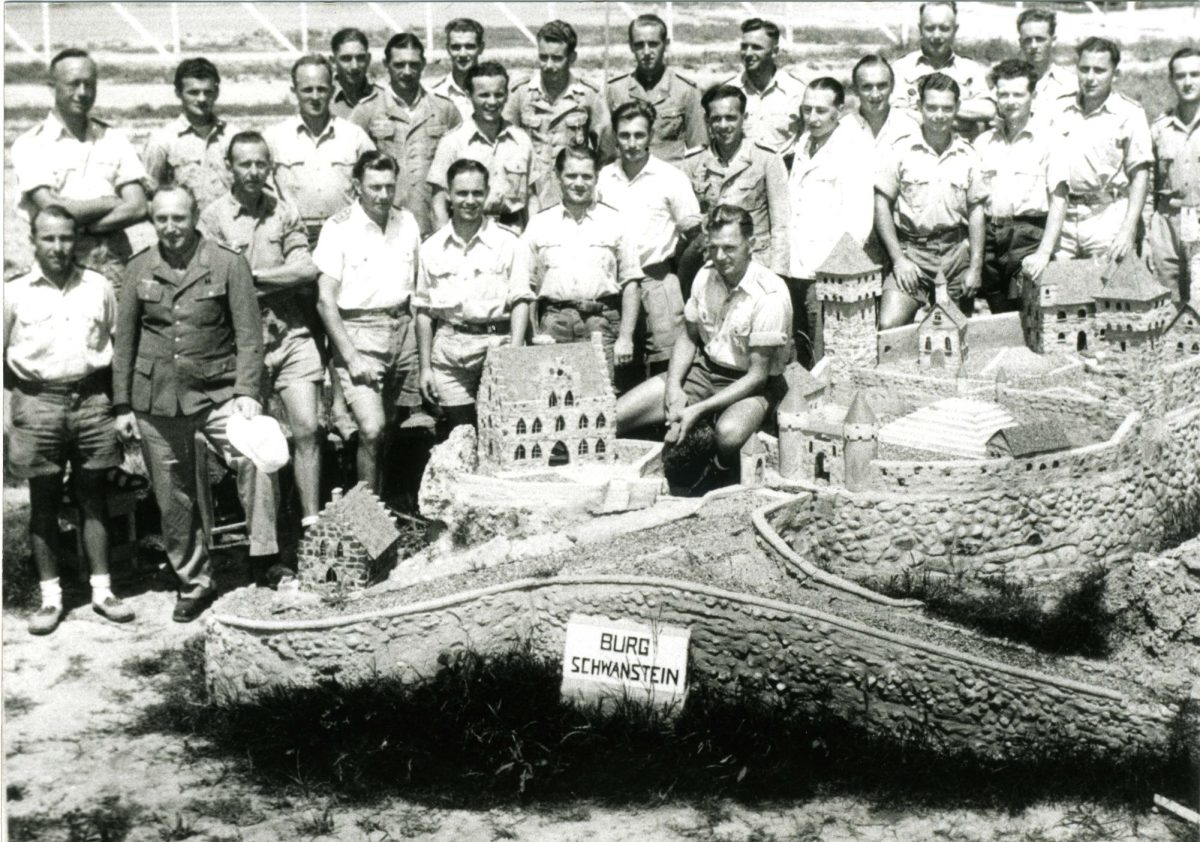
Texas A&M University Distinguished Professor of Anthropology Michael Waters, Ph.D., whose research focuses on the First Americans, has been conducting excavations around 30 miles northwest of A&M at the site of Camp Hearne, one of 700 World War II German prisoner of war, or POW, camps across the United States. Waters recently contributed to the documentary “Hitler’s Emissaries: German POWs in the United States” to share his findings on the camp.
His childhood interest in the world wars, as well as a book by late Professor Emeritus of History at A&M Arnold Krammer, Ph.D., on German POW camps in the U.S., were what initially led him to search for archeological evidence in Hearne with the help of metal detection technology.
“So many years ago, we did a little project in which we investigated Camp Hearne, and it turned into a book, eventually, that was published by the A&M press,” Waters said. “We did an archeological investigation, finding the old fountains that the POWs made and things that they lost out there and left behind. And then the local townspeople of Hearne and the surrounding county found out about the project and started donating things.”
Eventually, a museum was built at the site with government funding. In addition to accumulating items from the camp and visiting the National Archives, Waters was able to gather firsthand accounts from former German POWs as well as townspeople who lived in Hearne when the camps were operational.
“When I talked to the former POWs, they all said that this was really the first time they ever talked about the camp and their experiences there,” Waters said. “And the reason they wanted to do it was because they wanted to say thank you for everything that they learned and how they were treated in the United States. These POWs went back into the ruins of Germany and helped rebuild it, and they all said that by being treated well at the camp and being introduced to American democracy and working on ranches and whatnot, they could build a better Germany.”
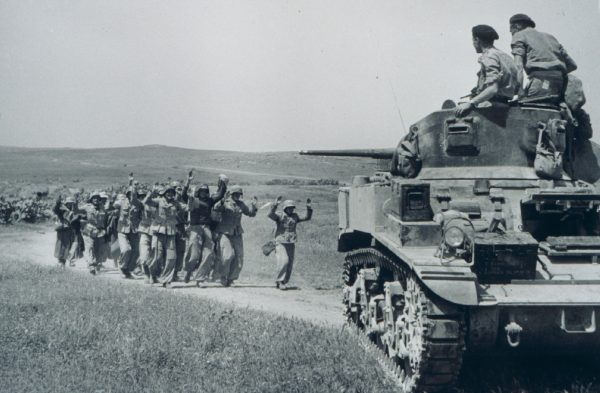
According to Waters, these German POWs played a significant role in fostering friendly ties between the U.S. and Germany after World War II. In addition to serving as a model for the rebuilding efforts, American ranch owners befriended the POWs, often exchanging items like Christmas cards, blankets and jackets after the POWs returned to Germany.
“In fact, when we had a little reunion here a long time ago of former guards and POWs, even two of the grandchildren started exchanging and spending time in Germany and the United States, one with a former guard and one with a former POW,” Waters said. “It’s kind of a success story in which we treated the German POWs quite well, they got to read the newspapers and everything and learn from that and go back and build a successful Germany, which is now one of our allies.”
Waters was able to share the story of his discoveries at Camp Hearne when he was invited to an interview for the “Hitler’s Emissaries” documentary.
“My part was being interviewed and asked about what happened at Camp Hearne, and I just had to spend a day with [the creator],” Waters said. “The fellow who created the documentary had the large task of taking hours of interviews with different people, myself and others, as well as looking through archival footage and then putting it all together to tell the story coherently about these German POWs that were in the United States from about 1943 until about 1945.”
According to Waters, the Camp Hearne project was a way to connect his childhood curiosity surrounding the World Wars to his interest in archeology.
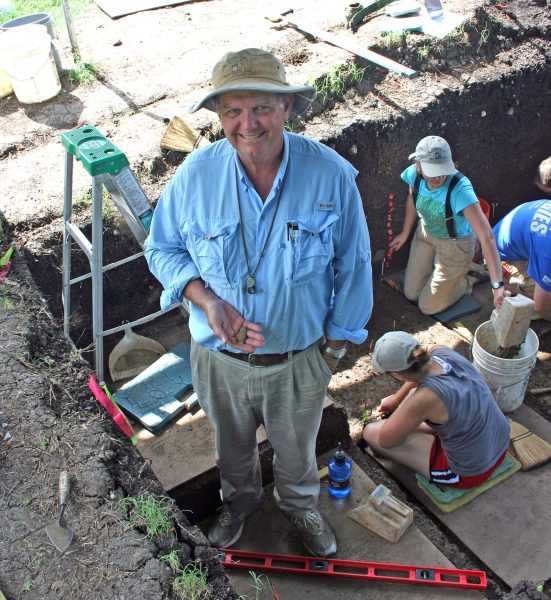
“My dad was in the Navy during the war, and everybody I knew when I was a kid was a veteran, so I heard stories of people from Pearl Harbor, to being in B-17s, to being in the Pacific — you name it,” Waters said. “And so it just really fostered my interest in learning more about the war. … And it turned into a bigger project than I ever imagined, because I couldn’t believe what we found. And you can try to mesh all that together into a holistic story of all the aspects of camp life.”
Despite the depth of his involvement while studying the history of Camp Hearne, Waters’ primary research focus is not World War II history, but rather the study of the First Americans. The director of the Center for the Study of the First Americans at A&M, he has done extensive research into the history of Clovis, one of the prehistoric American cultures, as well as cultures that may have preceded it.
“I’ve had the privilege of excavating a site near Salado, Texas, that’s about 15,000 years old, I’ve investigated a 14,000-year-old site in Washington and then I’ve also investigated with my associate director, Jessi Halligan, the Page-Ladson site, which is 14,600 to 14,700 years old,” Waters said. “And getting to work with a geneticist to get the first prehistoric human genome at the Anzick site, which was a Clovis genome from a Clovis individual, and then being able to see what the genetic history was of the First Americans, was a highlight.”
Waters continues to explore several different avenues of research into prehistoric Americans, one of which involves using radiocarbon dates to determine details about the extinction of megafauna in the Late Pleistocene, or the last Ice Age.
“Back in the Late Pleistocene, there were mammoths, horses, camels, dire wolves and saber-toothed cats living in Texas and elsewhere across North America, and nobody really knows when those animals became extinct,” Waters said. “And it’s important to know when those animals became extinct whether they all went extinct at the same time or whether it was a phased extinction. And if we can figure that out, we’ll be able to determine how much climate or human hunting was a factor in their extinction, or other things like fire, for instance.”
Waters is continually motivated by the excitement of making archeological discoveries, particularly at prehistoric sites, and he hopes his enthusiasm will inspire future researchers to continue his and his colleagues’ work.
“As long as you’ve always got something exciting going on, something that’s an interesting problem that will provide answers to the past, it gets you excited to come to work and do research and everything else and then instill this excitement on all the students you work with, because they’re the next generation,” Waters said.



!["2026 [Hillje, Tilly]/The Battalion. All rights reserved.”](https://thebatt.com/wp-content/uploads/2026/04/IMG_5581-1-1200x800.jpg)