



Last week, my friend asked what I was doing over the weekend. “Nothing much,” I said. “Just studying.” Before I could protest, she smiled and said, “Great. You’re coming camping.”
And just like that, my weekend plans changed. No Wi-Fi; no screens; no group chats, notifications or endless to-do lists. At first, it felt strange, almost wrong. I was supposed to be anxiously refreshing my inbox in anticipation of a decision for an application I’d worked on all year, but now I couldn’t open it until Sunday.
Initially, that unease lingered; my brain kept replaying what I might be missing. By Saturday morning, however, it faded. I forgot the email, the assignments and the constant buzzing in my pocket. Freedom had finally arrived.
The woods were quiet. Not peacefully quiet — that would have felt natural — but unnervingly so, like my life had been shouting at me and I had finally muted it. Every habit I’d normalized screamed in protest: reaching for my phone to check messages, scrolling through social media, answering notifications before I’d even noticed them. Silence was uncomfortable. Being unreachable felt irresponsible.
Once back in the real world, I saw the same sentiment mirrored by those around me. On the bus, 18 out of the 20 students I was riding with were glued to their phones. No one looked up. No one talked. The two who weren’t scrolling were chatting about class.
Silence and presence had become foreign. Sometimes, I catch myself doing the same thing, pulling out my phone just to fit in, because that’s what everyone else is doing.
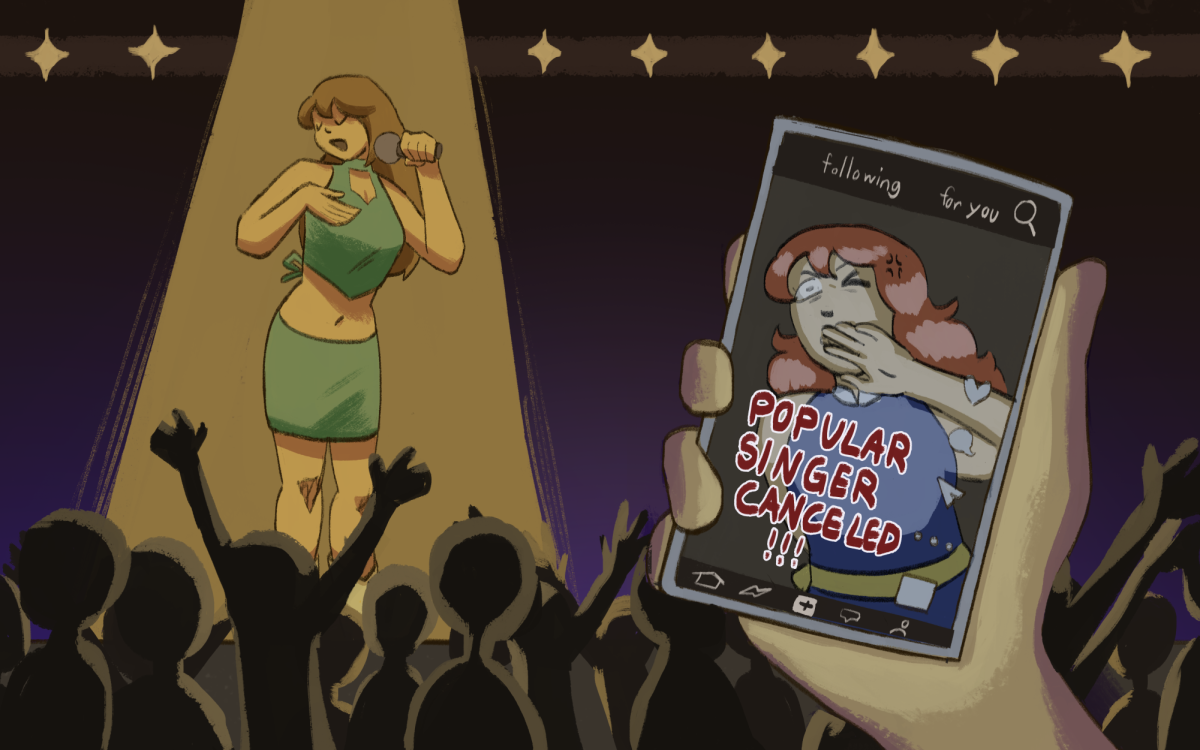
That weekend, I realized something: We’ve normalized being constantly reachable. Every quiet moment feels like it must be filled. There’s a pressure to respond instantly, stay updated and prove our presence online, even when no one’s actively demanding it. Always being “on” is celebrated as a connection, but more often than not it’s really just an obligation. We don’t just use our phones anymore — our phones use us.
I’ve fallen into this trap myself, five minutes of scrolling before bed turning into two hours of following three different rabbit holes.
But here’s the catch: When you actually unplug, the world doesn’t collapse. Conversations deepen, not because they’re curated for social media, but because you’re finally listening. The sun doesn’t get dimmer without your Instagram feed, and nature doesn’t lose its magic if you aren’t capturing it for stories.
That weekend, without the digital distractions, my friend and I talked for hours about everything and nothing, sat by the campfire without documenting every moment and went to bed without the usual ritual of endless scrolling.
I know how backhanded it is that I’m writing about not documenting every moment while documenting this trip, but I’m still learning to practice what I preach.
The quiet didn’t just feel nice; it felt necessary. The shift happened faster than I expected, as by Saturday afternoon, I wasn’t worried about messages, assignments or obligations. I was fully present.
And it made me think about college life, especially at a place like Texas A&M, where the culture constantly demands you be at your best: academically, socially and professionally. Your GPA, your internships, your network, your image — all of it is under scrutiny, and there’s never a pause button.
But taking a break isn’t indulgent, it’s essential.
You don’t need pitched tents or a cabin in the woods to unplug; the circumstances of my epiphany were extreme, but the principle can apply anywhere. Imagine waking up on a Sunday morning, putting your phone on airplane mode and walking outside.
No Canvas notifications, no assignment grades getting posted, no group chats blowing up. Just the breeze, your thoughts and maybe some music, because sitting with your thoughts can be scary. The initial discomfort — the fear of missing out, of being “out of the loop” — is part of the process. Sit with it for a while. Let yourself exist without performing. Step outside, breathe and be present — not because it’s trendy advice, but because it actually works.
These days, people feel the need to document every moment to validate it — photos with friends, recorded adventures, curated posts. But stepping away teaches a different lesson: Life has value without an audience. Fully experiencing a moment, even without proof, is liberating. You don’t need to capture everything; some moments are meant to be lived, not posted. Somewhere along the way, we started confusing being visible with being alive.
There’s a subtle kind of rebellion in this. We’re told to stay connected, to respond instantly, to never leave a chat on “read.” We’ve traded reflection for reaction, depth for distraction. And while phones and social media have undeniable benefits — I love my scroll breaks in between classes — the constant accessibility creates an invisible expectation of always being accountable. That expectation can quietly erode mental space, focus and even friendships, as interactions become performative.
I’m not advocating for total digital exile, that’s neither practical nor necessary — although, on second thought, that does seem very peaceful. But reclaiming intentional time offline is revolutionary in its own small way: It’s a reminder that you can step away without consequences, that your world continues, that your mind, body and relationships can benefit from it.
Unplugging even once a week — or even just for an afternoon — is a chance to reframe how we live.
Unplug to replug. Reconnect with people without the screens. Reconnect with your surroundings without the distractions. Reconnect with yourself without the noise.
The beauty of this past weekend wasn’t just in the quiet — it was in the reminder that silence can be restorative, that stepping back can help you move forward. We often forget that our constant busyness isn’t proof of productivity, but sometimes evidence of avoidance. We fill every space with noise to escape ourselves, our thoughts or the discomfort of simply being present, but when we finally allow ourselves to pause, the result is more than relaxation: It’s clarity.
So here’s the challenge for Aggies, college students or anyone that wants to reconnect with themselves: Take a deliberate break. Not just a scrolling break, not just a nap — a real pause. Step outside. Sit with your thoughts. Talk to a friend without recording your conversation. Take note of what it feels like to be free from obligation, even briefly. The world won’t end and your grades won’t vanish, but you might just remember how to breathe, listen and fully engage with life.
Life is loud, and it doesn’t often let you press pause. But when it goes quiet, that’s when you realize just how much noise you’ve been carrying — and why stepping away, even just a little, might be the clearest act of self-care, presence and even resistance.
The world will wait. You don’t always have to.
Prachi Arora is a political science freshman and opinion writer for The Battalion.











chloe • Apr 9, 2026 at 4:20 pm
this was very inspiring, prachi! i would love to see more of your work, you are very well spoken!
Kylie • Apr 9, 2026 at 4:17 pm
Such a great article— love reading your work Prachi!!
Poojasai Kona • Apr 9, 2026 at 2:23 pm
“Life has value without an audience.” — yes Prachi! This is such an important piece!