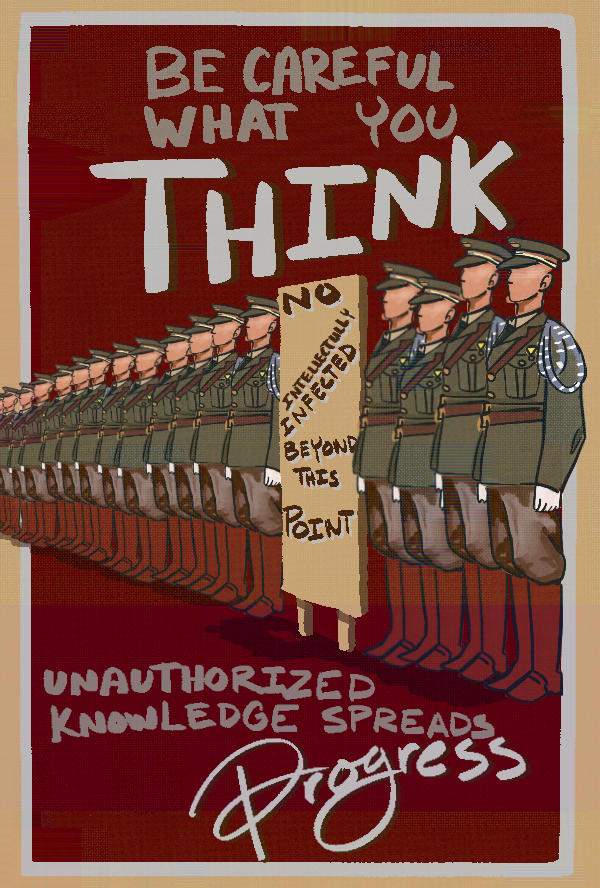



Finals week is often misunderstood as a time of academic stress, emotional instability and poor life choices. In reality, it is a highly structured opportunity to demonstrate your ability to perform under extreme sleep deprivation with minimal preparation.
Somewhere along the way, students were led to believe that success comes from consistency, time management and actually understanding the material. This is both misleading and deeply inconvenient. True academic success is built on urgency, selective confidence and complete disregard for long-term retention.
Follow these tips carefully.
Tip 1: Begin preparing at the last possible moment, and do not sleep
Timing is everything. Studying early may seem logical, but it introduces unnecessary stability. High-level academic performance requires pressure, ideally at a level where your brain begins negotiating with you.
The optimal strategy is to begin studying approximately 6-to-7 hours before your exam, preferably the morning of. This ensures maximum panic retention while eliminating the risk of genuine comprehension.
This should be paired with a strict no-sleep policy. At around 4 a.m., your brain will enter a state where everything feels either deeply profound or completely meaningless. This is the peak of your intellectual clarity. At 4:05 a.m., that clarity will disappear entirely. This brief window is where the majority of learning occurs.
Rest disrupts this process by introducing logic and memory, both of which are counterproductive.
Tip 2: Study in the least productive environment possible
Concentration is largely theoretical. The most effective study environments include the loudest floor of the library, directly next to constant construction or somewhere near the railroad tracks for added unpredictability.
For optimal results, consider studying at the Student Computing Center at approximately 3:28 a.m. on a Monday night, where the noise level suggests both productivity and mild chaos. Bonus points if your headphones are not charged. This is not a hypothetical scenario.
The ideal environment should include at least one loud conversation that has nothing to do with academics, a chair that raises long-term concerns about your spine and background noise that alternates between mechanical disruptions and existential dread.
If your thoughts are clear and uninterrupted, something has gone wrong.
Tip 3: Consume information in its most roundabout form
Reading textbooks suggests intention, which is risky. Instead, information should be gathered through a variety of indirect and increasingly questionable sources.
This includes 47-minute YouTube videos played at 1.5x speed, summaries from classmates who are also confused and, most importantly, asking AI to explain a topic until the conversation gradually turns into a discussion about your academic burnout and sense of purpose.
At some point, the original question will be lost entirely — this is the point. If anything, you are ahead.
All materials should eventually be consolidated into a single Google Doc titled “FINAL FINAL FINAL ACTUAL FINAL REVIEW,” which will be opened frequently and understood rarely.
The goal is not mastery, but recognition. If a word on the exam looks vaguely familiar, that is sufficient justification for selecting it with confidence.
Tip 4: Arrive for your exam at precisely the last possible second
Punctuality matters, but only to a certain extent. Arriving early suggests readiness, which sets unrealistic expectations.
Instead, waltz through the doors at exactly the scheduled time, preferably slightly out of breath. This establishes the correct mental state. Upon arrival, it also is important to realize you forgot a pen, borrow one that does not work properly and choose a seat that makes a noise every time you move.
This sequence creates the ideal level of adrenaline needed for confident guessing.
Tip 5: Treat multiple-choice questions as personality tests
Multiple-choice exams are less about knowledge and more about instinct. Each question presents an opportunity to trust yourself in ways that may not be supported by evidence.
If one answer feels slightly more correct than the others, select it immediately. If two answers seem equally plausible, the exam is flawed and you should take it up with your professor. If none of the options make sense, choose “C” and move forward with confidence.
Returning to questions introduces doubt, and doubt is the fastest way to turn a correct guess into an incorrect one.
Tip 6: Treat study guides as optional suggestions
Study guides are often presented as helpful resources. In reality, they function more as gestures.
The correct approach is to open the document, skim the content and decide that everything looks familiar enough to proceed. This creates a necessary illusion of preparedness without requiring additional effort.
Any further engagement risks actual learning, which may disrupt the carefully maintained balance of confidence and uncertainty.
Tip 7: Turn group-study sessions into a shared crisis
Group studying is most effective when it becomes a collective social experience rather than an academic one.
A successful session includes at least one person questioning the structure of the class, another attempting to explain a concept incorrectly with confidence and everyone agreeing to “go over everything” before collectively deciding that it is too late for that.
Over time, the session will shift away from studying entirely and toward mutual reassurance that no one knows what is happening.
This does not improve performance, but it does improve morale — which feels equally important.
Tip 8: Redefine exhaustion as discipline
By this point, exhaustion is inevitable. However, it should not be viewed as a problem.
Functioning on minimal sleep, caffeine and vague regret is not a sign of poor planning; it is evidence of dedication. Statements like, “I haven’t slept in two days” or “I’m answering based solely on vibes” should be interpreted as indicators of high effort rather than viewed with concern.
At a certain level, exhaustion becomes part of the strategy.
Tip 9: Lower your expectations strategically
High expectations create unnecessary pressure. Instead, aim for a more flexible definition of success.
Success can mean finishing the exam, recognizing at least one question or, in some cases, simply spelling your name correctly.
By expanding the definition of achievement, you ensure that success is always within reach.
Tip 10: Remember that studying is doubting your own potential
At its core, studying sends a dangerous message: that you are not already capable.
Confidence is key. Always.
Reviewing material suggests hesitation; rewatching lectures implies uncertainty. Flashcards, in particular, indicate a complete lack of trust in your natural intellectual instincts.
The most successful students understand that knowledge is temporary, but confidence is a mindset. If you believe an answer is correct strongly enough, that belief becomes its own form of evidence.
In this way, choosing not to study is not avoidance — it is self-assurance.
Tip 11: Reward yourself before, during and regardless of the outcome
Motivation is essential, and nothing builds motivation like an unconditional reward system.
Before your exam, consider getting a sweet treat to prepare yourself mentally. During your exam, think about the sweet treat you will get afterward. After your exam, get the sweet treat regardless of your performance.
This creates a positive reinforcement cycle that is entirely disconnected from academic results, which is ideal.
At the end of the day, your grade is temporary, but the emotional stability provided by a well-timed dessert is lasting.
Final thoughts
Finals week is often framed as the culmination of a semester of learning when, in practice, it is really just a system built on caffeine, urgency and optimistic guessing.
The students who succeed are not always the most prepared, but simply the most consistent in their ability to function under pressure with minimal information.
Knowledge fades. Notes get lost. Lectures are forgotten. But the confidence with which you select an answer you do not fully understand stays with you.
And in many ways, that may be the most valuable lesson higher education has to offer.
Prachi Arora is a political science freshman and opinion writer for The Battalion.