


When I first arrived at Texas A&M, I believed deeply in the promise of this place — a campus that embraced Aggies of every background, culture and personality. People love to say that from the outside looking in, you can’t understand it, and from the inside looking out, you can’t explain it. I believed there was always a place for someone like me, even if I didn’t know what that looked like yet.
I remain endlessly grateful for the opportunities I found here — the editors who pushed me to be fearless, the mentors who opened doors, those who believed in me and the programs that affirmed my passions. These experiences challenged me, building me into someone I never imagined I could become. They are the reason leaving this place is painful, because they showed me what A&M is at its very best.
But as the years passed and with graduation fast approaching, that belief has changed. I will triumphantly walk across that stage, feeling a sense of freedom at the prospect of moving out to experience and embrace new cultures and horizons.
A&M’s recent decisions to cave to political and cultural pressures have complicated my devotion to calling it my alma mater. When politicized events also plagued the institution in the past, I was not entirely aware of how these critical issues affected my student life.
After forming a tight-knit community within The Battalion, I now fully understand and realize the impact those decisions had on my last semester here. Covering the story of former President Mark A. Welsh III’s resignation forced me to confront this reality head on. Reporting on the subsequent ripple effects made it clear how volatile higher education has become.
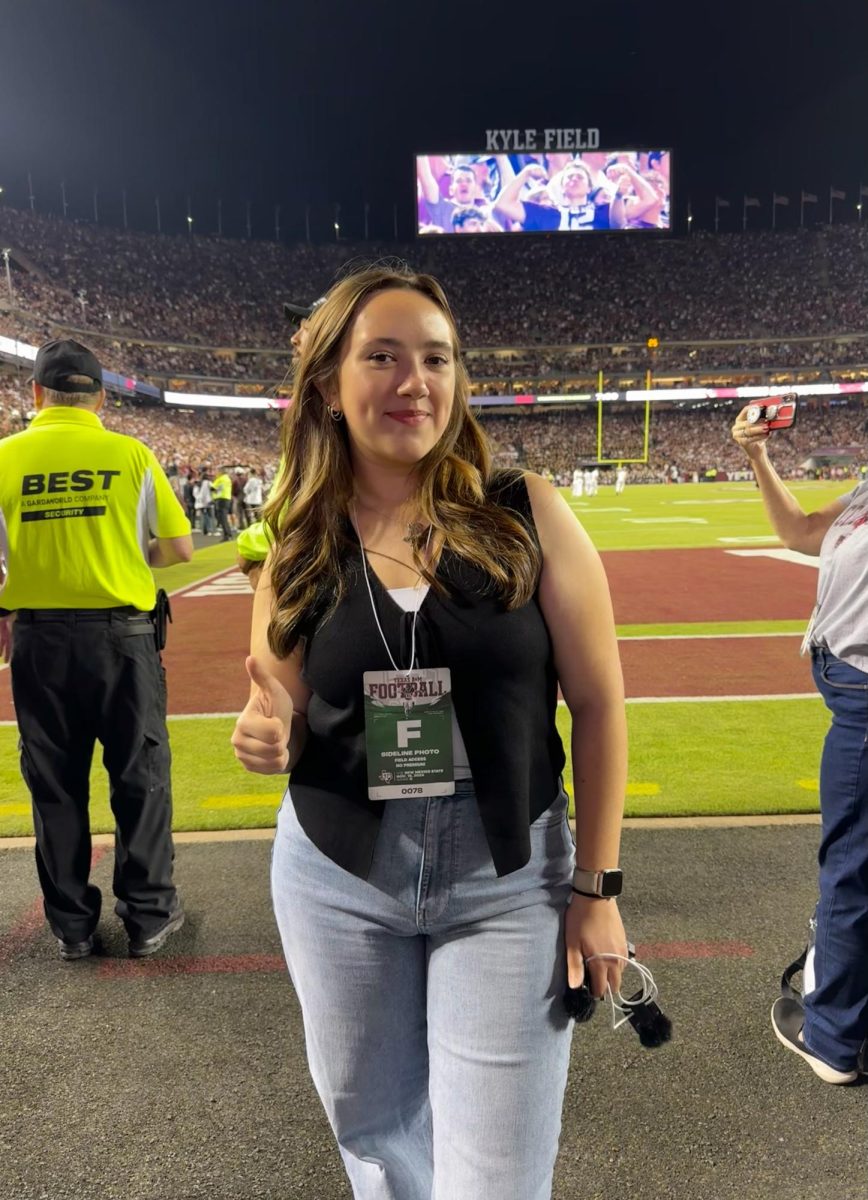
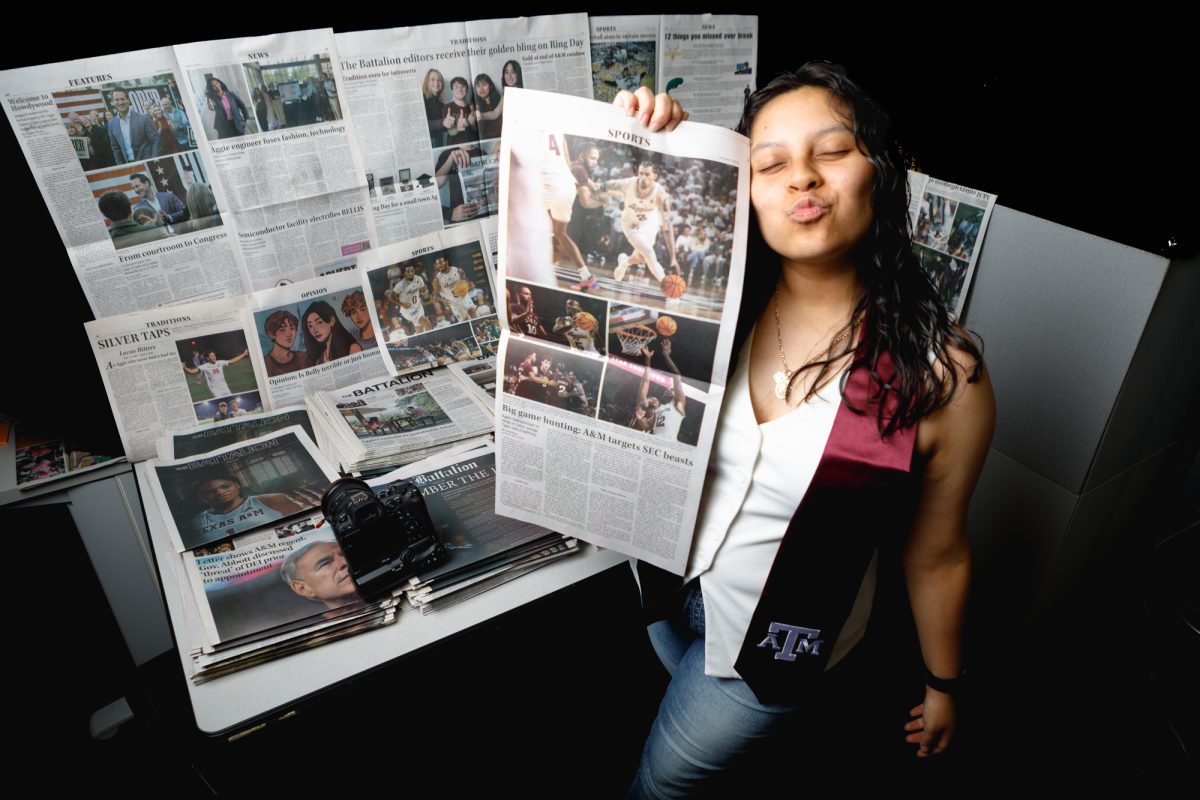
Yet, amid all this, The Battalion remains a haven for communicating truth and ideas. It was here where I discovered who I was and who I wanted to be. It was one of the few places where my voice truly belonged, and breaking news was both a job and a responsibility. The rush of live coverage reminded me that journalism still matters; it is more crucial now. Writing stories that landed above the fold of newspapers, late-night edits and frantic messages, a community was built that felt real in a way the rest of campus didn’t.
My time here has driven me to speak on the influences that compel students, faculty and staff to stay quiet. My role has always been to report the truth. The most important statement I can make now is that I am steadfast in supporting those who resist the erosion of academic, creative and personal freedoms.
As someone whose identity has never quite fit the mold, I’ve seen how vulnerable our communities feel when voices are stifled. I hope future Aggies will not feel the same pressure to stay silent or be shadowed, but will be free to express their passions openly, teach boldly and innovate without fear. That they will not feel compelled to hide the most authentic parts of themselves simply because leaders meant to protect them choose politics over people.
I write this final piece with gratitude. To my fellow editors Julia, David, Braxton, Matthew, Mathias, Fallon, Avery, Isa, Kaleb, Ashely, Adriano, Julius, Theresa, Zoe, Kynlee and Ian for inspiring me and for cracking the best jokes in the newsroom that made my day.
To past editors, including Ana and Nico, who trained me and helped me learn the ropes of AP style, breaking news and more. To the professors who guide students in the classroom and support us after. To my family and friends who never stopped believing in my path.
Finally, I write with hope that those who remain will rise up to protect what excellence we have left. That they will defend the classroom, the newsroom and every space where ideas still matter. I hope that they will fight for those who do not yet feel safe to come out and step into the light.
The Battalion gave me a voice. Now, I leave with the conviction to use it.