


The lights dimmed inside Rudder Forum as the last of the student-made films came to a close, quickly replaced by enthusiastic applause that roared throughout the room. Audience members leaned forward in their seats as the Howdywood Film Festival moved from screenings to celebration, with cheers breaking out as each award winner was announced. What began as a weekend of film quickly became a showcase of the stories, risks and people behind each project.
Hosted by MSC Aggie Cinema, the first annual Howdywood Film Festival featured both short and feature-length films created by current and former students. Screenings took place throughout the weekend, with feature films shown on March 21 at Rudder Theatre and short films presented the morning of March 22 at Rudder Forum, followed by an awards ceremony recognizing the top films in multiple categories. The event reflects Aggie Cinema’s mission to bring film programming to the Texas A&M community while giving student filmmakers a platform to share their work.
For many of those filmmakers, the projects shown at the festival began years before they reached the screen. Business junior Nicholas Martinez said his feature film “Scarecrow: A DC Fan Film” had been in his mind long before production started.
“‘Scarecrow’ was something that … I have been wanting to make for a long time,” Martinez said. “I had the idea back in late middle school.”
However, what started as a simple idea evolved into a more complex story than most superhero narratives. Martinez said he wanted to focus less on spectacle and more on character.
“It’s a lot less of a … superhero comic story more as it is a deep dive into like psychological abuse,” Martinez said.
When planning for his next film, Martinez realized that this was the idea he wanted to translate to the big screen, as he felt that the Batman franchise and characters would resonate with the audience as much as it did with him.
That shift from the concept to execution is one many student filmmakers experience, often learning through trial, collaboration and experimentation. Management sophomore Jacob Repak said building his short film “Atlas Crushed” began with developing characters that felt real.
“I really just wanted to have comprehensive characters that … make a friend group that felt alive,” Repak said.
As a first-time filmmaker, Repak said the process came with challenges but also lessons he will carry forward. He felt that his experiences gave him a valuable perspective that could be helpful for other prospective filmmakers.
“I would say, ‘Just try it out,’” Repak said. “‘Just getting yourself out there and making something that you’re confident in … just don’t beat yourself up from the smaller mistakes.’”
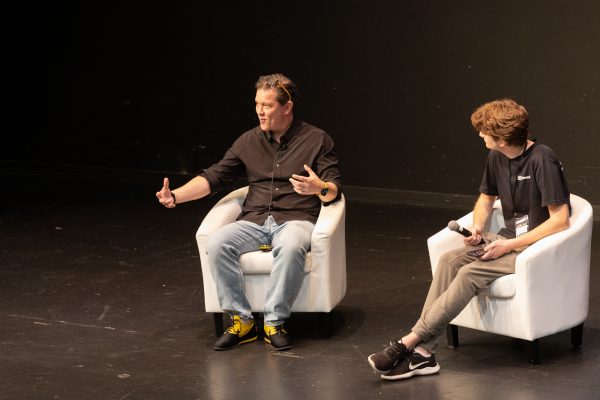
Yash Bansal ‘18, who presented two short films at the festival, “Act Your Age” and “Noise Cancellation,” said his work is driven by a desire to create stories that resonate with audiences on a personal level. According to him, that intention helps to shape both the stories he tells and the way he writes them.
“I wanted to make stuff that was relatable and stuff that I felt would benefit a past version of me,” Bansal said.
However, that relatability often depends on the people behind the scenes as much as the ideas themselves. Bansal said filmmaking is inherently collaborative, relying on a team to bring a vision to life.
“It’s a team effort to make any film,” Bansal said. “It’s not just one person doing everything.”
Bansal said that this collaborative process extends beyond production, shaping not only how films are made but how they are experienced by audiences.
While the process can take months of writing, filming and editing, many filmmakers said the most meaningful moment comes at the end when they see the finished product for the first time. For Martinez, that experience is both personal and reflective.
“My favorite feeling genuinely is … when it’s just me, in my room watching the entire film just going, ‘Holy shit, you made that,’” Martinez said.
But that feeling can shift when the film is shown to an audience; Repak said presenting his work publicly introduced a new layer of pressure.
“It was a little nerve-wracking,” Repak said. “You’re kind of analyzing a lot about it. … But as I watched it, my confidence kind of grew, seeing people’s reactions.”
Repak said that the moment when he heard the audience’s cheers echo through the room after his film’s screening became one of his favorite memories of the event.
For Bansal, sharing a completed film with others is the most rewarding part of the process, especially when audiences connect with the story. He said those moments of connection validate the time he spent bringing his idea to life.
“From it being an idea in your head to being a finished short film is very rewarding,” Bansal said. “Hearing that it was relatable for people is always the most rewarding thing for me.”
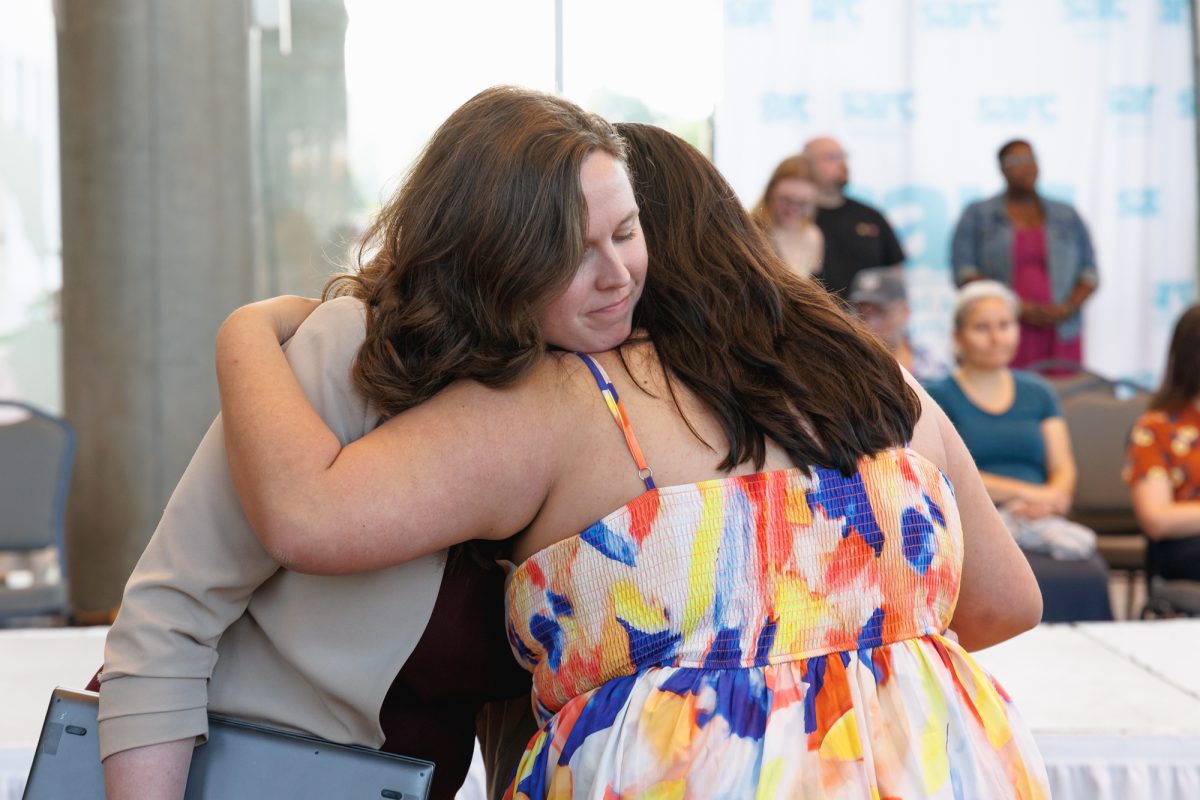
That connection between filmmaker and audience was evident throughout the festival’s awards ceremony, where applause and cheers followed each announcement. For Martinez, receiving recognition for his work marked an important milestone.
“This is like the first award I’ve gotten for a film I made … so that’s really cool,” Martinez said.
Bansal said the recognition carries additional meaning because of the personal investment he put behind each project.
“I worked very hard on this film,” Bansal said. “I put a lot of myself in the story, and it was very meaningful to be rewarded for that.”
Beyond awards, many filmmakers said their goal is simply to spark thought and conversation. Repak said he hopes his film encourages audiences to reflect on their own relationships.
“I guess I really want to inspire conversations … exploring loyalty and … trying to define it more,” Repak said.
As the festival came to a close, the energy in the room reflected more than just a weekend of screenings. It highlighted a growing community of student filmmakers using their work to explore ideas, share experiences and connect with others.

!["2026 [Hillje, Tilly]/The Battalion. All rights reserved.”](https://thebatt.com/wp-content/uploads/2026/04/IMG_5581-1-1200x800.jpg)