


If ballet and opera are dead, why did I spend 14 years of my life dancing?
Timothée Chalamet recently stated that he did not “want to be working in ballet or opera or things where it’s like, ‘Hey, keep this thing alive, even though no one cares about this anymore.’” The irony of Chalamet, a film star, saying other forms of art are dying when streaming services have taken over his own industry — I can’t name the last time I saw a movie in theaters — was really telling of his own insecurities.
While I understand Chalamet’s comments come from the fear that cinema is dying and he may very well be losing his relevance, there was no reason for him to drag other art forms down with him. Ballet and opera have existed long before Chalamet’s newest movie, “Marty Supreme,” and will exist long after people stop watching it.
They are by no means dead — but they are in danger.
If it seems that no one cares about ballet and opera, it’s not because there’s no interest, but because society pushes us toward more “practical” fields.
How many young girls — and boys, too — took dance classes as a child but stopped as they got older? While I in no way was ever at the level of a professional dancer, I loved ballet. However, I knew from a young age that it wasn’t a viable career option, and I miss it every day since quitting it in my junior year of high school to take the “realistic” route and focus on school.
Chalamet’s comments come at a time when art is under attack. Secondary and postsecondary educational institutions are increasingly focused on STEM fields, with the arts and humanities losing funding and interest.
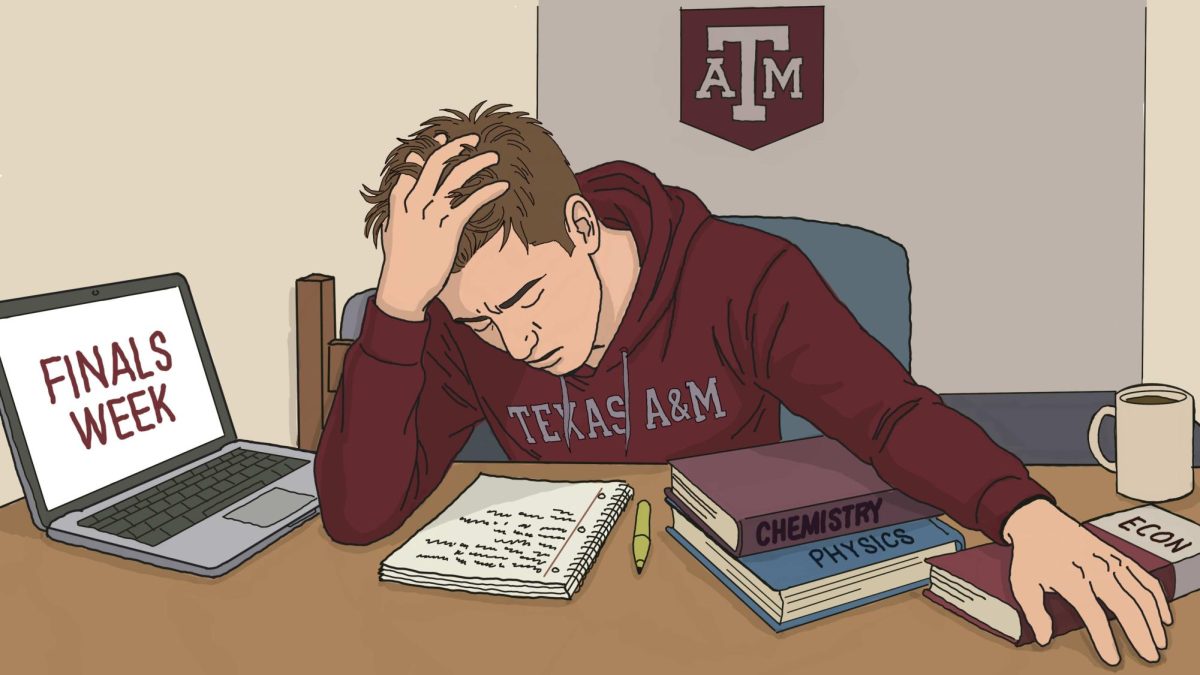
Texas A&M only has five fine arts majors consolidated into the College of Performance, Visualization & Fine Arts, which recently had a proposed new building removed from a list of approved projects. With only about 3,000 students enrolled in the college, the fine arts are definitely dwindling in size, but does that mean that ballet and opera are dead?
No, it absolutely does not.
To see ballet and opera as dying is a very Western and Americanized view. Sure, collegiate fine arts programs are tiny in comparison to those of other more mainstream departments, but this is just a cultural phenomenon — ballet and opera are thriving in Europe and Asia.
The Royal Ballet and Opera in London is a premier performing company with schools that bring these art forms to young people. The Bolshoi Ballet in Moscow is home to some of the most talented dancers in the world as Russia serves as a powerhouse in the ballet industry. Natalia Osipova, who is arguably the best ballerina currently performing, has danced with both of these companies.
These art forms are thriving in other countries because people invest time into them. They teach young people to express themselves and go after what they love.
Now, I found my own ballet community when I was growing up, so there are clearly spaces for these arts in this country. With major companies like the American Ballet Theatre, New York City Ballet and OPERA America, ballet and opera have their place in the United States. It’s not like it is in the east — but it should be.
Chalamet needs to recognize that these art forms are foundational for his own career. You can’t have “Wonka” or “A Complete Unknown” without dancers and singers.
His comments are dangerous because they perpetuate the notion that we don’t need to invest time and care into these communities when there are thousands who find their purpose in ballet and opera. His statement that he lost “14 cents of viewership” painfully points out the low wages these artists receive, pushing the narrative that these aren’t “realistic” careers. Ballet and opera aren’t dead yet, but they could be if we start thinking like Chalamet.
It’s not just that his statement was incorrect, it’s that it attacks already threatened communities — communities that are necessary for the soul.
In the 1989 film “Dead Poets Society,” Robin Williams gives an iconic speech to his class about the power of poetry and says the following:
“We don’t read and write poetry because it’s cute. We read and write poetry because we are members of the human race. And the human race is filled with passion. And medicine, law, business, engineering, these are noble pursuits and necessary to sustain life. But poetry, beauty, romance, love, these are what we stay alive for.”
This is what ballet and opera are for; they give us outlets as dancers, singers, choreographers, composers and viewers to express ourselves, to understand our emotions and navigate the world we live in. Art gives us the power to question and to believe in the impossible. Without them, what do we truly have to live for?
While Chalamet’s comments are threatening at an already tumultuous time within the arts, I don’t think ballet and opera will ever go away, because to quote from Chalamet himself, “What is this earth without art? Just a rock.”
Bethany Mann is a history freshman and opinion writer for The Battalion.