


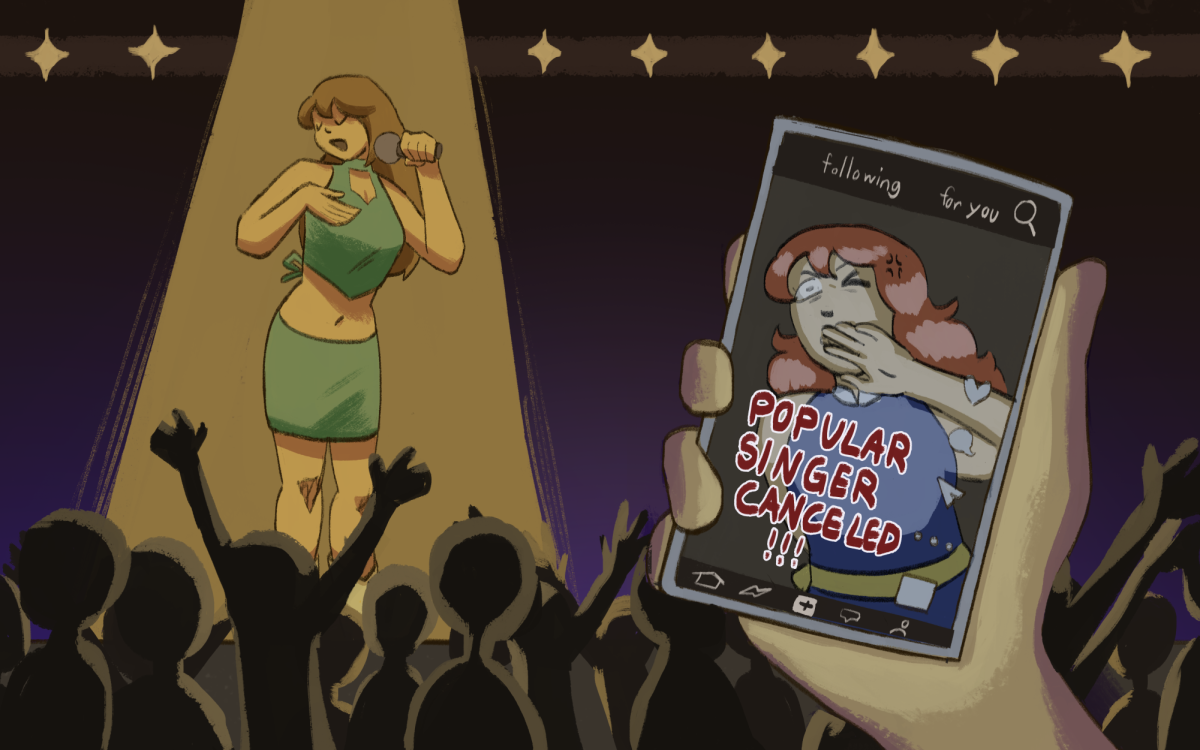
Who doesn’t like social media? Endless memes, discourses and dramas keep us all entertained in our fast-paced world. We are fed simple narratives that are easily understood, and problems are framed as black and white issues in exchange for our undivided attention.
It feels almost impossible nowadays to avoid the political discussions that occur on our phone screens. With 96% of adults in the United States reporting they use the internet, it makes sense that social media — and the internet as a whole — acts as the main battleground for current political issues.
The problem with our current system is that the algorithms don’t reward political commentators who are reputable, but rather those who drive clicks and, more importantly, engagement — keeping us reactive instead of informed. This can allow for people with ulterior motives to control narratives and divide people with nothing more than words.
A recent example of this phenomenon is prank YouTuber turned investigative journalist Nick Shirley’s expose on the alleged fraud being committed by Somali immigrant-run daycares in Minnesota. Shirley’s video, which supposedly unearthed multiple of these daycare centers committing millions of dollars in fraud, has been viewed by millions of people and has even caught the attention of the White House.
In the wake of this scandal, five states — including Minnesota — have had their grants for child care and family assistance frozen by the Department of Health and Human Services. Additionally, all 50 states are now being required to go through numerous verification processes to further combat the alleged fraud.
The most unfortunate part of this entire scandal is that these claims haven’t been fully verified by any additional investigations into the matter. Indeed, much skepticism has been placed on Minnesotan leaders and business owners without the allegations ever being fully fact-checked.
This is how creators on social media manipulate facts and use their platforms to sow distrust into our society. It’s true that there has been fraud in daycares in Minnesota, however, the specific claims championed by Shirley have not been proven. Though, they have changed the way groups of people are viewed in America.
This is just one example of many, and it will surely not be the last of this vicious cycle. Complicated issues are simplified for mass media consumption while narratives are pushed to create attention and amplify specific perspectives. We have seen it here at Texas A&M with the firing of former President Mark A. Welsh III, and we will continue to see it with the push to ban content within classroom settings.
When inaccurate facts dominate narratives, real decisions are made that affect groups and result in significant consequences. If we back a couple of years, a fringe alt-right conspiracy theory called Pizzagate alleged that a pizza shop in Washington, D.C., was the center for a child sex trafficking ring run by the Democratic Party.
As ridiculous as it may seem now, this conspiracy theory was heavily perpetuated online by political commentators. A man named Edgar Welch even took it upon himself in late 2016 to investigate the matter by going to the restaurant with an AR-15 rifle and shooting up the store, looking for the “kidnapped” children. Obviously, there were none, but it was just the start of the same violent cycle we are seeing today, whether done with guns or through social media.
It’s almost unfathomable that something like this could have happened in our very own country, yet we seem to have essentially forgotten about it. If Pizzagate occurred today, would it just be another article we scroll past on X?
The actual answer is that we have gotten used to this. Since 2020, there has been a significant shift in our behavior, and it hasn’t gone unnoticed. Nearly 47% of Americans have said they believe public behavior has gotten worse since the pandemic. We are more divided than ever, and our attitudes are not much better.
Regardless of our individual political affiliations or values, we should recognize that we’re at a crossroads within our country. Do we continue with the status quo of violence, hatred and censorship? Or do we try to recognize when lies are spread and reject those who try to profit off our division?
When we allow social media to become our main source of information, we open ourselves up to the risk of other people controlling narratives. Social media is not going away, so it’s our responsibility to recognize misleading information. Life is complicated enough as it is; we don’t need ridiculous conspiracies — or outright lies — to keep our attention.
Wyatt Pickering is a business honors and finance junior and opinion columnist for The Battalion.










Matt Poling • Jan 27, 2026 at 9:03 am
But if it weren’t for alternate media, we might all still be asked to believe that Covid-19 started next to China’s military virology research facility by coincidence but that Hunter Biden’s smutty laptop was a complex foreign intelligence operation. The Minnesota media was clearly helping their government cover up fraud and the national media’s coverage of Texas A&M “Banning Plato” is similarly agenda-driven. But I agree that news CONSUMERS have to be more discerning and intentionally drink from both fountains to get the full flavor. At least until PROFESSIONAL journalists stop filtering theirs in the manner they have been.
Perry Carlson • Jan 26, 2026 at 10:14 pm
Excellent observations! We need to realize it’s not just the ultra right or conservatives doing this. Both sides are equally guilty and equally responsible for positive change.