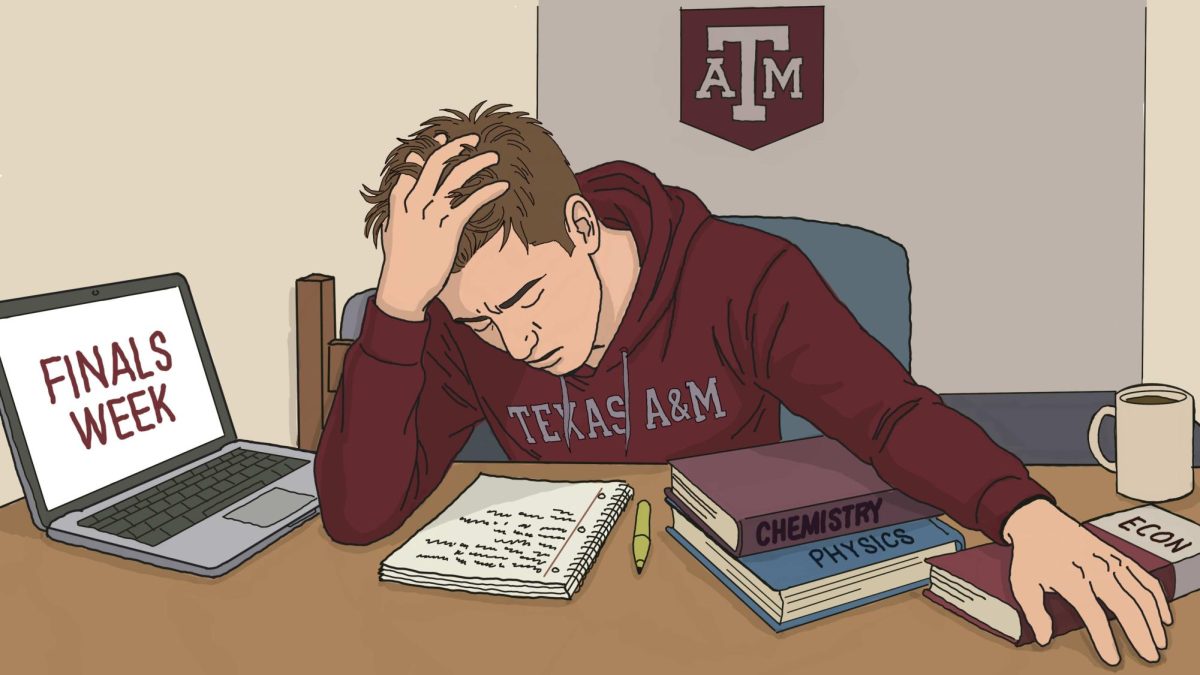


At some point, I stopped counting the minutes until my classes ended and began measuring how many months worth of unavoidable, redundant and irrelevant courses I was expected to endure until graduation.
My Bachelors’ of Arts in political science, for example, obligates me to take at least three life and physical science electives in addition to several basic math courses. Like many of my peers who pursued AP or IB classes throughout their high school years, the vast majority of courses we take to fulfill these requirements today are unwelcome duplicates.
I imagine most students with a private or chartered elementary education would concur with my position against the tiresome, interminable cycle of learning and relearning prior knowledge under mandate. International students, especially those from East Asia and the Middle East, likely already possess a mastery of these rudimentary requisite subjects.
Yet, I am inclined to acknowledge the significant population of students who have managed to enter into academia without an understanding of what most would consider to be foundational literature. These deficiencies can range from illiteracy to isolated lapses in common knowledge, and often manifest in civics, humanities and foreign language proficiency; in any case, the public school system is largely to blame for these failures.
Regardless, the situation demands a systemic reassessment of early state schooling, the university admissions process and undergraduate curricula nationwide.
Principally, elementary and secondary school standards must be raised and effectively enforced, even at fiscal and reputational cost. This means holding back students who do not meet the minimum benchmarks while accommodating both greater diversity and complexity in class subjects beyond reading, writing and math at the K-12 level.
Universities, even public state colleges, must amend their admissions strategies to choose the best and brightest and select for quality, not quantity — irrespective of if that policy limits their tuition-earning potential. For decades, holistic review has been weaponized as a tool to allow the inadequate through the gates rather than as a buffer against adverse circumstances. Let universities return to their place as prestigious places of learning, exclusive and discriminating. The half-witted can bear the humiliation of attending a community college — hardly a half-step up from high school — instead.
Ultimately, undergraduates should be granted greater liberty to define their course schedules in such a way that their higher education experience is, in fact, educational and not merely a completion checklist to earn a certification without actually fostering intellectual development.
Our administration must realize that some students anticipate unique career paths, sometimes in particularly esoteric or unconventional disciplines — this should be reflected in what courses they are permitted to enroll in. In this regard, a modular system may be adopted as a potential solution to the arbitrary restrictions and false prioritizations of the status quo.
No doubt, a more efficient reformed curriculum would empower students to finish their degree plans more quickly as well. No longer would we have to suffer the illogical prescription of profitable 4-year plans, free to pursue internships, research positions and real work experiences that offer tangible career value.
Of course, while the aforementioned reforms would arrive at the advantage of proper academics, university executives are sure to protest. The strenuous and superficial system they have constructed chains customers — we, the student body — to their campuses, and for longer. Every extra semester spent behind a desk translates into revenue for the administration.
Many of the issues in post-secondary education can be attributed to this relationship; universities no longer represent intellectual institutions, but rather corporate enterprises. Perhaps this truth serves as a greater motivation to lobby for the changes I have detailed here. Only once we achieve the implementation of these initial improvements — a vital first step — can we begin to ascend the path of unadulterated academic purity.
Aidan Zamany is a political science sophomore and opinion writer for The Battalion.