


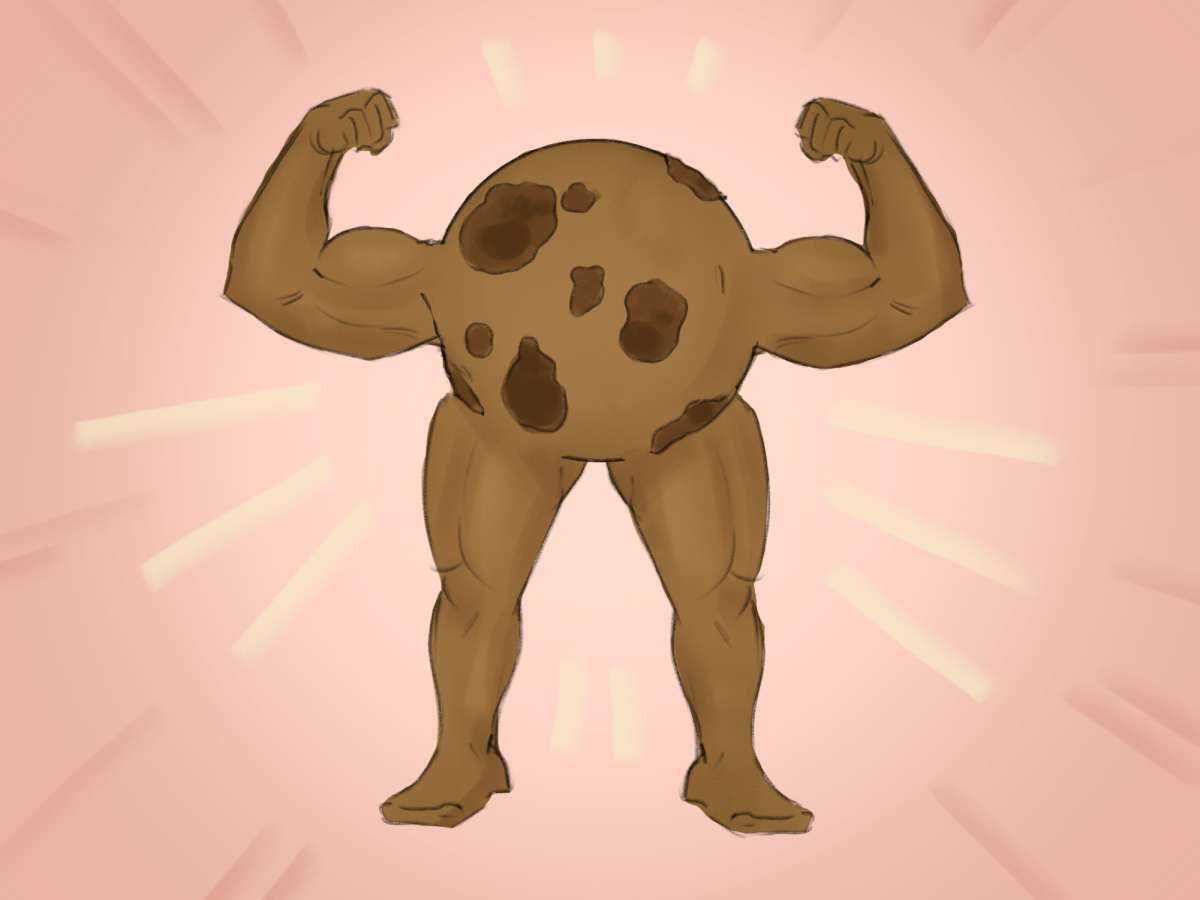
Protein — it’s what’s for breakfast, lunch, dinner and every other possible meal of the day.
The protein epidemic has attacked our country, and it’s affected every advertisement, grocery store shelf and my entire TikTok “For You” page.
The most ridiculous product I’ve seen is the brand new stuffed cookie from Insomnia Cookies, which promises a “nutrient-dense” sweet treat with a whopping 11 grams of protein. Eating this cookie will only cost you $4.79 plus tax — and your dignity.
At some point, protein stopped being a nutrient taken to supplement your gains and instead became a new fad that companies everywhere are looking for the opportunity to capitalize on.
Many of these products claim to provide a similar, or even better, culinary experience than their competitors. Regardless of its truthfulness, if you are bombarded daily with the same rhetoric cautioning that you must only consume these products or else you will be in a nutritional deficit, then that claim quickly becomes a reality in the minds of many.
Despite my distaste toward any alternative protein-packed product on the market, there must be a consumer base for this kind of “innovative” product if companies continue to push these foods to the common denominator: protein-obsessed American consumers. However, is this just going to be the next big thing for the next couple of months, or will it die out like so many other similar movements?
Diet trends are nothing new, and getting your protein in is just the next fad waiting to eventually fade away. While there isn’t necessarily anything wrong with wanting to consume a higher amount of protein, most Americans already meet or even exceed the recommended amount of protein per day. These new products are simply unnecessary, as many people don’t need them for a balanced diet.
As always, there are exceptions that would justify someone consuming more protein than the average person. People who are more active or those trying to build muscle need more protein in their diet, but there are sources that are significantly better and more efficient than any spiked protein drink — yes, this is a real thing — can offer.
But what if this protein movement was bigger than one TikTok video? The United States government surely has an influence on what people consume.
The Make America Healthy Again movement, more commonly known as MAHA, has been introduced by Secretary of Health and Human Services Robert F. Kennedy Jr. as the guidelines that every American should follow to live a healthy lifestyle.
While the MAHA movement says whole foods should be prioritized, it recommends that the consumption of protein be significantly increased for the betterment of your health.
Thus, it’s no surprise that companies would want to market their products in such a way:, for regardless of how necessary these new innovations are, how could they be bad for us when the protein-rich lifestyle is encouraged by our very own government?
We exist in an era where we are constantly bombarded with brands and influencers trying to shove their lifestyles down our throats as the optimal way we should be living. But it’s about time we look beyond the $300 courses and wake up to the fact that not every part of our existence has to be optimized in order for us to live a life of fulfillment and satisfaction.
We are already comparing ourselves to Instagram models who give us a warped sense of what normal looks like, so why make it harder on ourselves by turning every meal we eat into a performance metric?
Because if we justify eating anything on the basis of macronutrients or the latest government report, we forget why we even eat in the first place: There is value in food beyond its amount of protein, whether that be the people we eat it with, the memories that are associated with it or that it’s just what you were craving.
Not every choice you make at the grocery store has to be justified — that only leads to burnout and associating the basic human function of eating as something to feel guilty about. Is chasing the next trend the healthiest thing we could do, or maybe is it just realizing that finding balance is less complicated than we think?
At the end of the day, food is more than the label slapped onto the back of the package. It’s how we connect with and fuel the life we want to live. Maybe we should actually just eat what we want and live a life with fewer restrictions.
Oh, and eat some more fiber while you’re at it.
Wyatt Pickering is a business honors and finance junior and opinion columnist for The Battalion.