


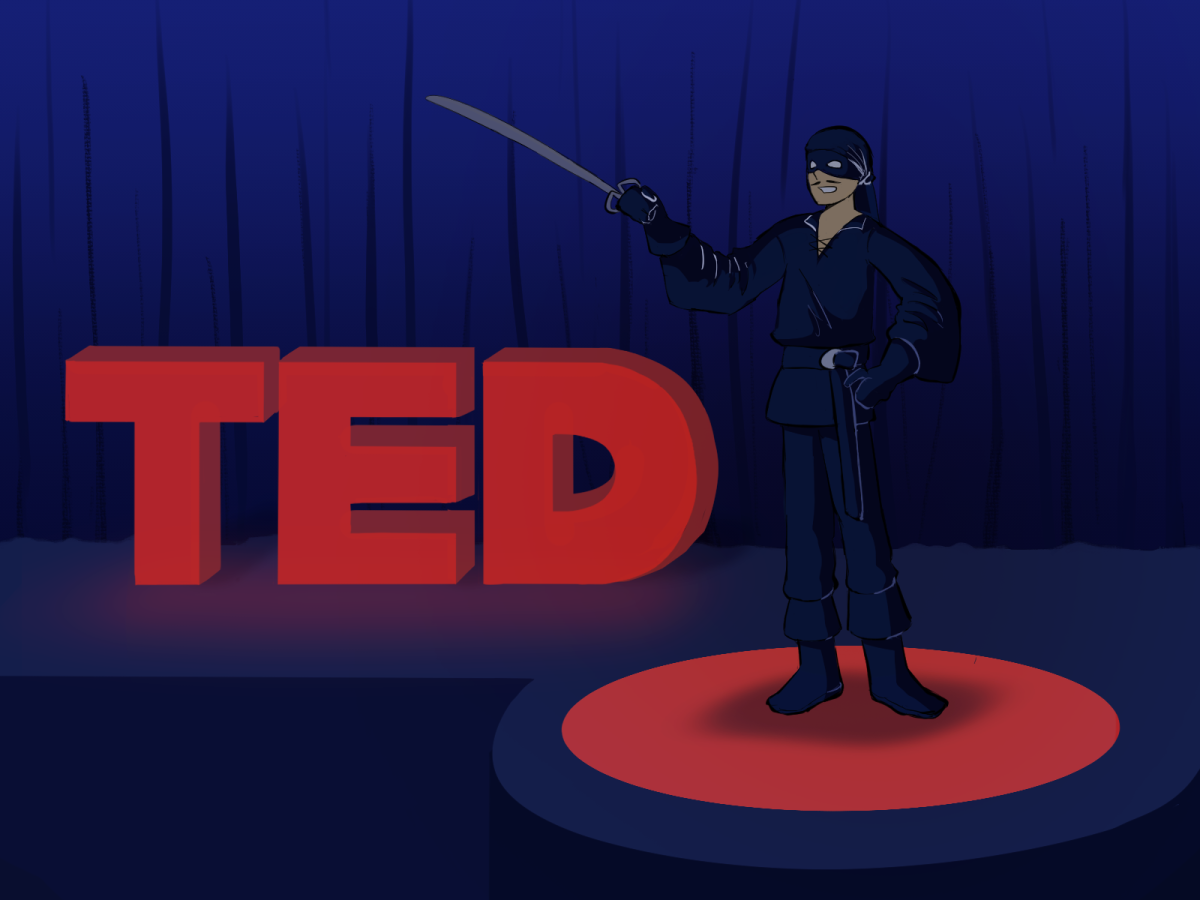
As of recently, my roommate and I have started hosting movie nights in our dorm room. We decide on a movie we want to watch and project it onto a white sheet hung precariously from the wall. Several days ago, I suggested we watch “The Princess Bride”; it’s a classic, and something I always choose when I’m in the mood for a cozy fantasy.
Imagine my shock and horror when my roommate admitted that she — and I shudder to say it — didn’t love “The Princess Bride.” In fact, she didn’t even like it.
Inconceivable.
Needless to say, I ran to my laptop to write an exposé on why “The Princess Bride” should be required viewing for every person.
For those warthog-faced buffoons — as Wesley might lovingly call those who haven’t yet seen this cinematic masterpiece — “The Princess Bride” is a tale about farmboys, princesses, pirates and general chicanery, all told through a frame narrative of a grandfather reading a story to his sick grandson. The core storyline follows Buttercup and her one true love, the farmboy Wesley, working to find each other and save the kingdom after the evil Prince Humperdinck separated them. As one might expect from a classic fairytale, it’s full of great lessons that are sadly disappearing from today’s society.
Without further ado, here are my three timeless takeaways from “The Princess Bride.”
Life is pain: a lesson in unfairness
Picture this: You’re in a grocery store, choosing the best banana from the bunch — or apples, or pears, if you prefer a different fruit — and you hear a child arguing with their mother. The poor kid just wants a candy bar, and his mother refuses him? He yells out: “IT’S JUST NOT FAIR!” You’ve probably heard, witnessed or even yourself performed a variation of this before.
It’s true, life isn’t fair; that isn’t an easy pill to swallow. It’s certainly easier to pretend that everyone has the same impeccable moral standards. But as Wesley says, “Life is pain, highness. Anyone who says otherwise is selling something.”
Anything that seems too good to be true probably is. Pretending like problems and unfairness don’t exist in the world doesn’t get you anywhere — it merely leaves you stagnant. It wasn’t until the heroes of “The Princess Bride” accepted that they had to fight for their kingdom, not sit around waiting for someone else to, that their lands were saved.
As you wish: a lesson in self-sacrifice
We are a society that appears to shun self-sacrifice in any shape or form. It’s a Burger King world — my way, right away — and that means that for most, giving up one’s own conveniences for someone else’s happiness isn’t on the table. I’m not sitting on a high horse here, because I’ve fallen into this trap numerous times. While it’s often far more enjoyable to do what we want rather than what someone else does, this self-serving attitude is a trap all the same as we become too comfortable with being comfortable.
There’s a phrase in “The Princess Bride” that I’ll leave here: “As you wish.” What a bon mot! It’s what Wesley tells Buttercup anytime she asks him to do something, even if it’s a simple task she could do herself.
Servant-hearted leadership may seem contradictory, because it means that being first is equivalent to putting yourself last. But that’s exactly the point — it is through self-sacrifice that we can encourage and better ourselves and those we love.
The kissing part: a lesson in unconditional love
The word “love” is thrown around carelessly these days. You love your parents, of course. But you also love that girl’s shirt. And you love that new Starbucks drink. And you love that one leaf that you spotted walking out of KINE 199.
You get the idea.
As Inigo Montoya, swordsman extraordinaire, is fond of saying, “You keep using that word. I do not think it means what you think it means.”
Love perseveres. As with self-sacrifice, it isn’t always easy, nor is it something you can bestow and then run away from. “The Princess Bride” is a great representation of unconditional love because it shows how two people have to find a way to be together, even when everything stands against them. Even when it’s hard, even when it seems impossible — they find a way.
The post-credits: a lesson in finding meaning
Phew! That’s a lot for one film. Still, that is exactly why I love it so much: It’s an entertaining story bursting with lifelong takeaways.
Oftentimes we glaze over fairytales as teaching moments because they’re considered “fantasies.” It can be easy to ignore what they’re saying if those lessons are placed alongside magic wands and giant dragons — but some of the most important things I’ve learned have come from such stories, and “The Princess Bride” is no exception.
After all these words that mean exactly what I think they do, hopefully I’ve convinced my roommate to watch and appreciate this great film — and maybe you, too!
Marie Kneeland is an English honors freshman and opinion writer for The Battalion.







Sandra kneeland • Apr 3, 2026 at 9:34 am
Makes you really think. Great article